
Affiliate ads compliance means meeting three sets of rules at once: US law (mainly the FTC’s endorsement rules), the ad platform’s policies, and the terms of the network or advertiser whose offer you promote. Fail any one of them and the result is the same: ads rejected, payouts reversed, or an account banned right as spend starts to scale. This guide covers what each layer requires, where affiliates most often slip, and how to build a setup that survives review.
TL;DR
- The FTC requires a clear and conspicuous disclosure of your affiliate relationship, placed next to the link, not in a footer or on a separate legal page.
- Google and Meta treat cloaking (showing reviewers different content than users) as a serious violation. It can end the ad account and reach the profiles behind it.
- Restricted niches such as CBD, supplements, peptides and crypto face certification and geographic limits on top of the general rules.
- Both the advertiser and the affiliate are responsible. Advertisers are expected to monitor what their affiliates publish.
- Most rejections come from the ad, the landing page and the claims, so an audit of those three usually beats any technical workaround.
Table of Contents
- The three layers of affiliate ads compliance
- FTC disclosure rules every affiliate must follow
- Platform rules: where affiliate campaigns actually fail
- A practical compliance checklist for affiliate ads
- Our perspective
- Getting help with restricted-niche campaigns
- Where regulators and platforms are heading
- FAQ
- Sources
The three layers of affiliate ads compliance
Think of compliance as a stack. Each layer can sink a campaign on its own.
| Layer | Who enforces it | What it checks | Typical penalty |
|---|---|---|---|
| Law | FTC and state regulators | Disclosures, truthful claims, substantiation | Enforcement action, fines, orders to stop |
| Platform | Google, Meta, TikTok and others | Ad content, landing page, restricted categories, circumvention | Disapproved ads, account suspension |
| Network or advertiser | The program you promote | Brand terms, allowed traffic sources, keyword rules | Cancelled commissions, removal from the program |
The platform layer is the one that moves fastest. Enforcement is usually automated first, and a human only looks later. According to Jon Loomer’s breakdown of Meta’s circumventing systems rules, these violations are among the most common reasons advertisers get ads rejected and accounts shut down, and they can bring the most severe punishment.
FTC disclosure rules every affiliate must follow
If you earn a commission when someone buys through your link, that is a material connection. The FTC’s Guides Concerning the Use of Endorsements and Testimonials in Advertising (16 CFR Part 255, revised in 2023) say that connection must be disclosed clearly and conspicuously. That means easy to notice and easy to understand.
Where the disclosure goes
The FTC’s own Q&A on endorsements says that if you earn commissions through links, the relationship should be disclosed, and a disclosure next to the link is the practical standard (FTC: What People Are Asking). The most common mistake is what we call disclosure separation: a footer note or a bio link that the reader never sees while clicking. As one publisher’s affiliate guidelines summarize the FTC position, the disclosure should sit close enough to the link that nobody can follow the link without seeing it.
Practical rules:
- Put the disclosure in the same block of text as the link, above or beside it.
- Use plain words: “I earn a commission if you buy through this link.” Avoid vague tags like #collab. Clear labels such as #ad are better.
- Disclose in the language of the content. The FTC says a Spanish-language post needs a Spanish disclosure.
- Repeat the disclosure in video and audio content, not only in the description.
Claims matter as much as disclosure
The FTC’s Advertising and Marketing on the Internet: Rules of the Road starts from a simple point: advertising must tell the truth and not mislead. For health, supplement and peptide offers, that is where affiliates get in trouble. Income claims, “cures” and before-and-after promises need substantiation, and an affiliate repeating an advertiser’s unsupported claim shares the exposure.
Advertisers cannot outsource responsibility
The FTC’s guidance on endorsements, influencers and reviews expects advertisers to monitor the content their affiliates produce and act, up to ending the relationship, when an affiliate makes unsupported claims or hides a material connection. If you run a program, build review and takedown into the contract. If you are an affiliate, expect to be audited and keep screenshots of your published disclosures.
Peptide brands face the same framework. One specialist publisher notes that the 2023 revision of the Guides governs affiliate marketing for research peptides (Your Peptide Brand), so “research use” wording does not exempt a brand from disclosure duties.
Platform rules: where affiliate campaigns actually fail
Even fully lawful ads can be refused. Platform policies for restricted goods apply globally and are built around risk management and platform reputation, not local legality. A product that is legal to sell in your state can still sit on a restricted list (Daily Intel Service).
Restricted niches need certification
- CBD: Google allows topical CBD ads only for certified advertisers, in limited places (California, Colorado and Puerto Rico), and requires LegitScript certification, per Google’s CBD policy.
- TikTok: the platform generally prohibits tobacco, e-cigarettes and most crypto ads. Supplements need documentation in many markets. TikTok’s ad policy reference notes that every ad is reviewed before going live, typically within 24 hours.
- Crypto, forex, pharma, peptides: each platform layers its own licensing or pre-approval rules on top. Read the current policy page for each platform and country before you build creative.
If you plan to run in these categories, our guides on CBD Facebook ads, kratom ads approval and crypto ads approval walk through the category-specific hurdles.
Cloaking is a policy violation, not a compliance tool
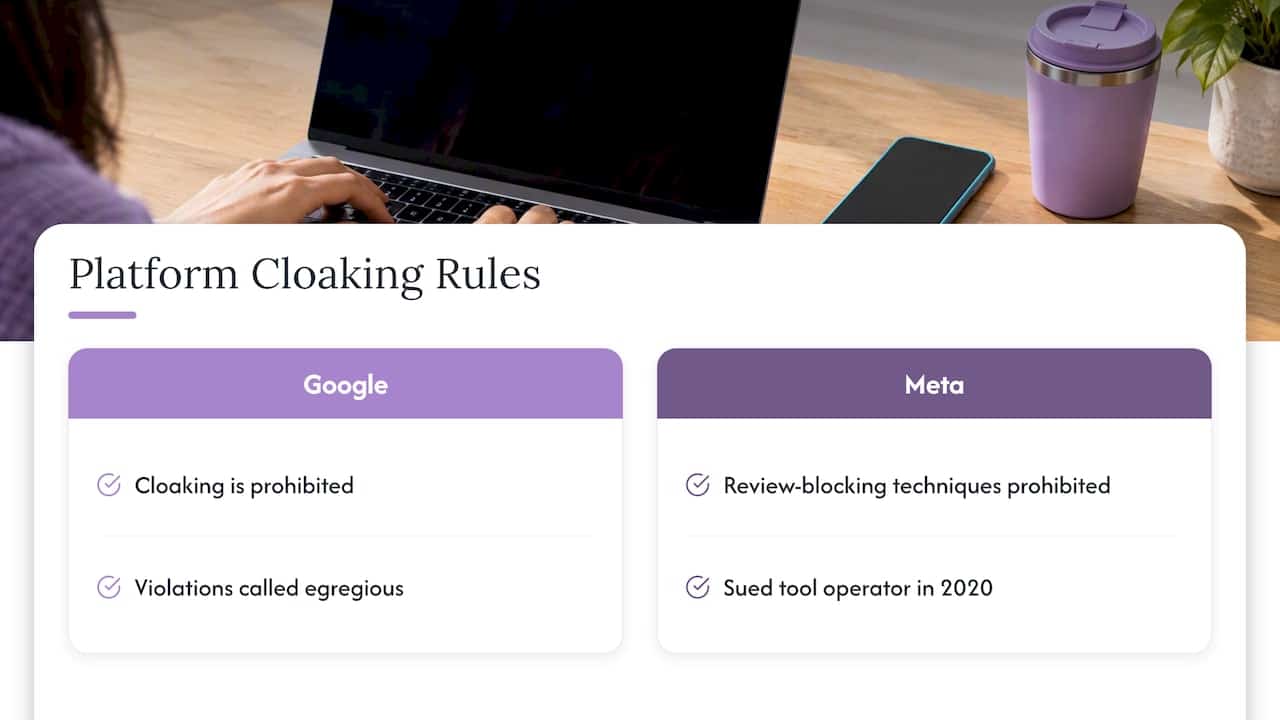
This is the point many affiliates get wrong, so we will be direct. Google’s circumventing systems policy says cloaking, meaning showing different content to different people or to Google to hide things that might break the rules, is not allowed. It calls violations of this policy egregious. Meta’s rules similarly prohibit techniques that limit its ability to review a landing page, and Meta has gone to court over it: it sued the operator of a cloaking tool in federal court in California in 2020.
The consequences cascade. Automated systems look for landing page mismatches and for links between new assets and banned ones, and one bad page can take down a personal profile, not just an ad account (Jon Loomer). Rotating domains or lightly altered creative can also trip “evading enforcement” flags, the same source explains.
You should know this before you spend anything. If you want to understand the legal and platform exposure in detail, read our page on ad cloaking risks, platform bans and FTC scrutiny.
A practical compliance checklist for affiliate ads
Use this before every launch and again after every platform policy update.
- Read the program terms. Check allowed traffic sources, brand-keyword bidding rules and required disclaimers.
- Audit the ad. No guaranteed results, no “before and after” in health categories, no personal attributes (“Are you struggling with…?”), no misuse of brand names.
- Audit the landing page. The page a reviewer sees must be the page a user sees. Disclosure, price, refund terms and contact details should be visible.
- Place the affiliate disclosure by the link. Not in the footer.
- Check the category rules. Does the niche need certification, a licence or a country restriction?
- Separate assets. Do not reuse a banned domain, payment method or identity for a new account. Account-linkage is one of the detection triggers.
- Keep records. Screenshots of ads, pages and approvals, with dates, make appeals far easier. Our guide on how to secure, document and appeal an ad account suspension covers the paper trail.
- Monitor affiliates. If you are the advertiser, sample affiliate content weekly and keep a documented removal process.
For a platform-focused version of the audit, see our 7-step audit to prevent circumventing systems suspensions and the five compliance fixes that pass affiliate ads approval.
Our perspective
We work every day with advertisers in CBD, peptides, kratom, crypto, forex, supplements and other restricted verticals, and the same pattern repeats. A campaign is rarely rejected because of one dramatic violation. It is rejected because the ad, the page and the offer each lean a little too far, and an automated system adds them up.
So our first step with a new client is an audit, not a technical build. We look at the offer, the claims, the landing page and the account history, and we tell the client plainly what is likely to pass review as written and what is not. Some verticals need certification before anything else will help, and we say so.
We also believe in telling people the risk. Cloaking is against the written policies of the major platforms. Our work covers cloaking and server setup, safe landing pages and bot and reviewer detection, and we offer it alongside ongoing account management. But a business that chooses to use any of it should do so with open eyes about platform enforcement and the legal exposure. That is why we publish pieces such as why audits beat cloaking in restricted industries. In most cases, clean creative and a well-built page do more for long-term account health than any trick.
— Umar
Getting help with restricted-niche campaigns
If your offer sits in a restricted category and your ads keep getting disapproved, you do not have to guess which layer is failing.
- Consultation call: a conversation about your niche, platforms and account history. No price is published, so ask us for a quote. Book it from our homepage.
- Setup Cloaking System: a one-off setup priced at 1599 (see the services page).
- Done-For-You: a one-off engagement priced at 3599 (see the homepage).
We suggest starting with the consultation. It is the quickest way to learn whether your problem is creative, page, certification or account history, and which package, if any, fits.
Where regulators and platforms are heading
Three trends are worth planning for in 2026.
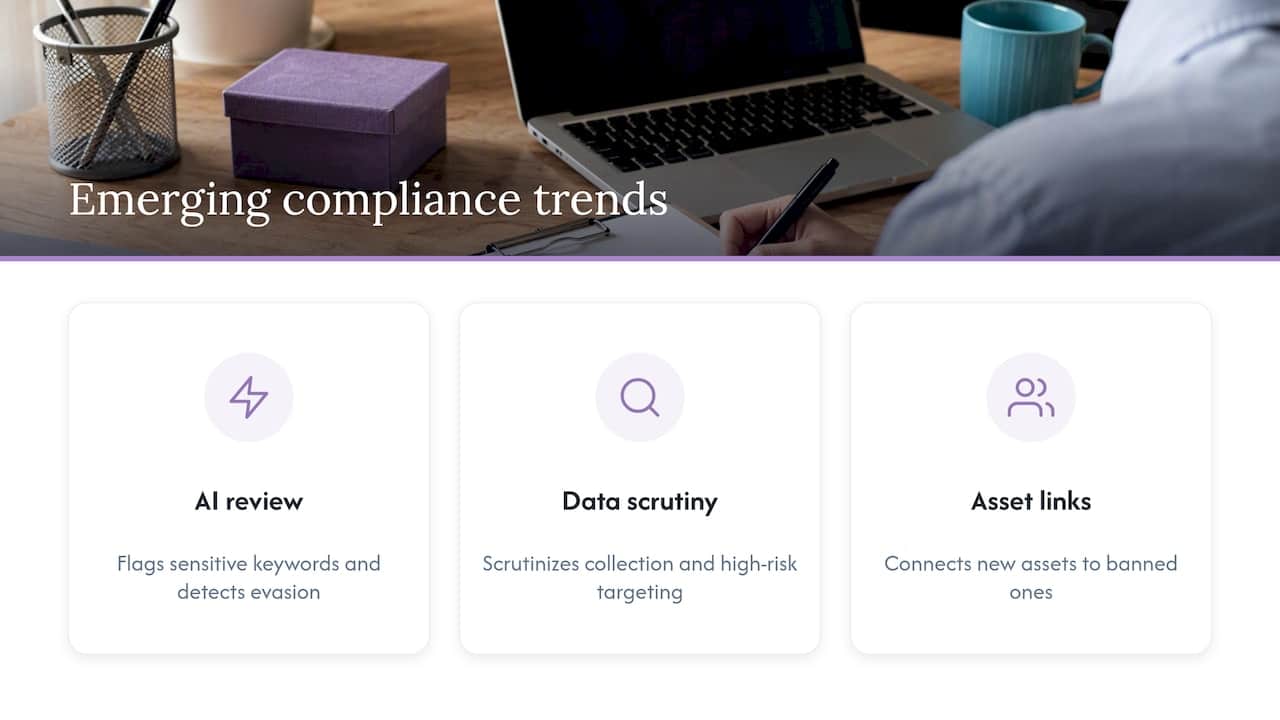
More automation. Review is increasingly handled by AI systems that flag sensitive keywords and detect evasion. That favors advertisers who align copy and page themes with guidelines from the start, a point made in Jon Loomer’s analysis.
Wider scrutiny than disclosure. Regulators and platforms are paying more attention to how data is collected and used to target people in high-risk categories. Collect consent clearly, and describe your tracking honestly in your privacy policy.
Tighter links between accounts. Detection of connections between new assets and banned ones keeps improving. A fresh account built on a banned identity is more likely to be a repeat violation than a clean start.
FAQ
Do I have to disclose affiliate links in paid ads, or only in organic content?
Yes. The FTC’s rules apply to paid placements as well as organic posts. If a reasonable consumer would not expect you to earn a commission, you must disclose it clearly, close to the link and in the same language as the ad. If the ad format has no room, send users to a landing page that shows the disclosure above the offer.
Who is liable if an affiliate breaks the rules: the advertiser or the affiliate?
Both can be. The FTC expects advertisers to monitor affiliate content and act when they find unsupported claims or missing disclosures, and affiliates carry their own responsibility for what they publish. A written affiliate policy and a documented review process help the advertiser. For legal questions about your own program, speak to an advertising attorney.
Can a legal product still be banned from advertising?
Yes. Platform restricted lists are based on risk and reputation, not just local law. CBD is the clearest example: Google allows it only for certified advertisers in a few places. Check the current policy page for each platform and country before you build a campaign.
Is cloaking a safe way to get restricted ads approved?
No, it is not risk-free. Google’s policy prohibits cloaking, and Meta’s standards bar techniques that limit its review. Enforcement can reach the ad account and the profiles linked to it. Any business considering it should weigh that risk against a compliance-first approach.
Sources
- FTC: Guides Concerning the Use of Endorsements and Testimonials in Advertising
- FTC: What People Are Asking about the Endorsement Guides
- FTC: Advertising and Marketing on the Internet, Rules of the Road
- FTC: Endorsements, Influencers, and Reviews
- Google Ads Help: Circumventing systems
- Google Ads Help: CBD policy
- Jon Loomer: Circumventing Systems and Evading Enforcement
- PPC Land: Facebook files a lawsuit over a cloaking software
- Daily Intel Service: Restricted Products
- TikTok ads policy reference
- Superhive: Affiliate Disclosure Guidelines
- Your Peptide Brand: FTC’s View on Affiliate Marketing for Peptide Brands