

Ad cloaking is not a crime in itself, but using it to hide deceptive, prohibited, or misrepresented content from platform reviewers and regulators is what creates legal exposure. Every major ad platform treats cloaking as a policy violation that can trigger immediate suspension, and consumer-protection regulators treat it as evidence of intent to deceive. If you are running campaigns that rely on cloaking, pause and confirm that what reviewers see matches what your customers see.
TL;DR:
- Google Ads can permanently ban accounts for cloaking; successful appeals need dated screenshots, proof that the ad and landing page match, and supporting documentation.
- The FTC judges an ad by its overall message, requires scientific support for health claims, and may hold affiliate networks liable for campaigns they control.
- Before launch, align ad and landing page claims, retain evidence for health, financial, or performance promises, and place required disclosures where customers can see them.
- For restricted categories, target by region only to present lawful offers, verify age gates, monitor policy changes, and preserve landing page versions for audits.
Table of Contents
- What ad cloaking is and how major platforms define it
- Platform policies at a glance: Google, Meta, Yahoo, TikTok, Bing
- Regulatory and legal risk: FTC guidance, court precedent, and enforcement examples
- Practical compliance checklist for media buyers and advertisers
- What a compliance-first approach to restricted-vertical ads looks like
- Why compliance beats concealment in the long run
- How we help restricted-vertical advertisers get approved and stay approved
- FAQ
- Sources
What ad cloaking is and how major platforms define it
Ad cloaking means showing one version of a page or ad to a platform’s review system and a different version to real visitors. A reviewer or crawler sees compliant content; a user lands on something else entirely, often a restricted product, an exaggerated claim, or content the platform would have rejected outright.
Platforms detect this mismatch through a handful of common signals:
- Differences in behavior based on user-agent strings or IP address ranges tied to known reviewer or crawler traffic.
- Redirect chains that send reviewers to one URL and real users to another.
- Device-fingerprint or browser-fingerprint differences that serve distinct content to flagged versus unflagged visitors.
Platforms treat this as circumventing review, not just a gray-area tactic, because it defeats the entire purpose of ad approval. A format built specifically to avoid detection reads as deceptive regardless of what the underlying product is.
Platform policies at a glance: Google, Meta, Yahoo, TikTok, Bing
Policy language varies, but the enforcement pattern across platforms is consistent: cloaking is treated as a severe violation, not a minor infraction.
- Google Ads defines cloaking under its circumventing systems policy, and violations can lead to account suspension and a permanent ban from advertising on the platform.
- Meta has pursued cloaking advertisers through legal channels, not just policy enforcement. The platform announced legal action against advertisers who used cloaking to circumvent ad review, signaling that repeat or large-scale offenders may face litigation on top of account bans.
- Yahoo lists cloaking or malicious behavior among disallowed techniques, specifically tying it to low-quality offers and deceptive landing pages.
- TikTok and Bing apply similar circumvention standards within their broader deceptive-practices policies, though published language is less detailed than Google’s or Yahoo’s.
Across all of these, the remediation paths look similar: an appeal with documented evidence of a fix, proof that the landing experience now matches the ad, and in some cases a waiting period before reapplying. Blanket denials without supporting documentation rarely succeed.
Pro Tip: Screenshot your ad and landing page together before and after any fix, timestamped, so you have ready evidence for an appeal.
Regulatory and legal risk: FTC guidance, court precedent, and enforcement examples
Beyond platform bans, cloaking can create direct regulatory liability when it hides claims that would otherwise require substantiation or disclosure. The FTC’s Health Products Compliance Guidance explains that deceptive advertising includes material misrepresentations or omissions, and that health-related claims need competent, reliable scientific evidence behind them. Cloaking a claim from reviewers does not exempt it from this standard; it simply delays scrutiny.
Key points advertisers should understand:
- The FTC evaluates ads by their “net impression,” meaning the overall message a consumer takes away, not just the literal text.
- Intermediaries and affiliate networks can be held liable for deceptive campaigns they control or participate in, as shown in the LeadClick/LeanSpa line of cases, where an affiliate network was found liable for deceptive advertising it managed on a client’s behalf.
- Disclosures must be clear and conspicuous; if a disclosure cannot be made clearly within an ad format, the FTC’s staff guidance on online disclosures advises against running the ad at all.
Platform enforcement and regulatory enforcement increasingly move in parallel. Reuters reported on a lawsuit against a seller of fraudulent ad tools, illustrating that platforms now pursue legal remedies against the people building and selling cloaking infrastructure, not just the advertisers using it. In litigation, evidence of deliberate cloaking is often treated as proof of intent to deceive, which can increase penalties rather than mitigate them.
Practical compliance checklist for media buyers and advertisers
Reducing risk starts with a straightforward audit, then moves into documentation you can produce if a platform or regulator asks questions.
- Audit your funnel. Confirm your ad copy and your landing page make the same claims, in the same terms, with no hidden substitutions.
- Document substantiation. Keep records showing the evidence behind any health, financial, or performance claim before you launch.
- Place disclosures clearly. Avoid burying required disclosures inside a hyperlink when the claim needs the disclosure to avoid being misleading.
- Use allowed technical tools only. Certified click trackers and legitimate language or geo-targeting are fine; anything that changes the promoted product or conceals restricted content is not.
- Build operational controls. Age gates, verified landing pages, and saved logs or screenshots give you a paper trail if you ever need to appeal a suspension.
- Know when to pause. If you are unsure whether a tactic crosses the line, stop the campaign and consult legal counsel or a compliance-focused review before relaunching.
Pro Tip: Keep a dated folder of every landing page version tied to each ad campaign; it turns a suspension appeal from guesswork into a documented case.
What a compliance-first approach to restricted-vertical ads looks like
Advertisers in restricted categories such as CBD, crypto, pharma, or supplements face review systems that flag entire product categories regardless of individual ad quality. A compliance-first approach to this problem looks different from simple evasion.
- Server configuration and landing pages documented well enough to withstand a platform audit, not just built to pass a first look.
- Device-aware segmentation used for lawful targeting purposes, such as directing traffic to region-appropriate offers, rather than hiding prohibited content from reviewers.
- Continuous monitoring for policy changes across platforms, since restricted-vertical rules shift frequently.
- Verified age gates, conspicuous disclosures, and saved evidence that can support an appeal if an account gets flagged.
This kind of setup treats platform access as an asset worth protecting, which means every technical decision has to hold up to scrutiny, not just avoid it.
Why compliance beats concealment in the long run
Building funnels that can survive a platform audit is slower than building ones designed only to slip past a reviewer, but it is the only approach that protects your ad accounts and your payment processing over time. Platform access and payment relationships are business assets you accumulate over months or years. Losing them to a permanent ban, triggered by a cloaking scheme meant to save a few weeks of setup time, costs far more than the shortcut ever saved. Transparent, verifiable funnels and professional compliance support are not the cautious option. They are the only option that keeps a restricted-vertical business running past its first suspension.
— Umar
How we help restricted-vertical advertisers get approved and stay approved
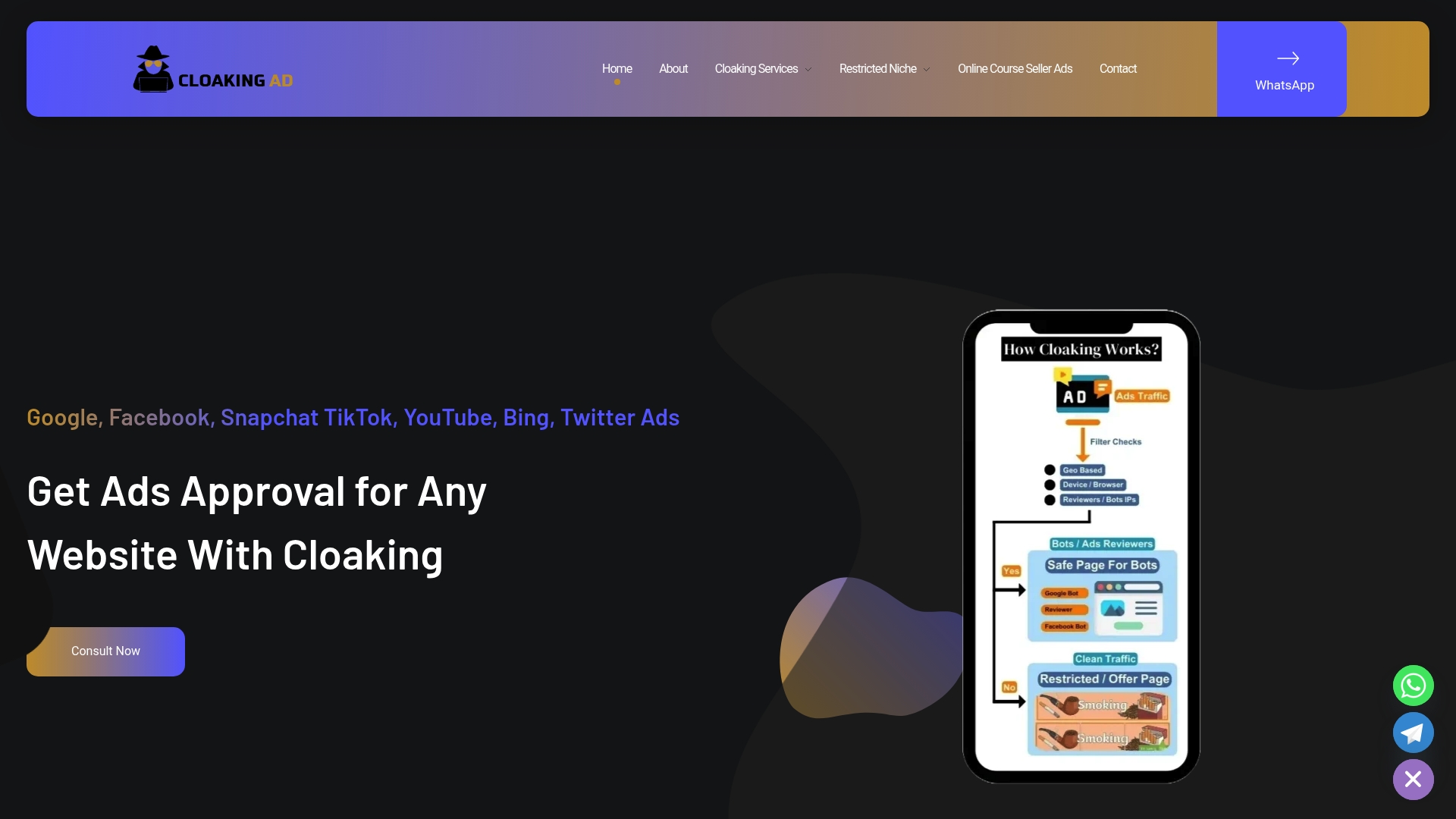
We built our services around the gap between what platforms demand and what restricted-vertical businesses actually need: approval that maintains compliance over time. Our SETUP CLOAKING SYSTEM service configures servers, landing pages, and monitoring with documentation built in from the start, and our Done-For-You engagement adds ongoing account management so you are not rebuilding your funnel every time a policy shifts. If you want a straight answer about your specific niche before committing, book a consultation call and we will walk through what a compliant setup looks like for your category.
This article is general information, not a substitute for advice from a qualified lawyer. Consult a qualified legal professional about your own circumstances before acting on anything here.

FAQ
Are ad blockers technically illegal?
Ad blockers are consumer software tools and are not illegal to use or distribute in most markets; they are a separate issue from ad cloaking, which is a technique advertisers use to show different content to reviewers than to users. The legal questions around ad blockers involve copyright and terms-of-service disputes between publishers and blocker makers, not advertising fraud law.
What is ad cloaking?
Ad cloaking is a technique where an advertiser’s server detects whether a visitor is a platform reviewer or crawler versus a real user, then serves each one different content. Platforms including Google Ads and Yahoo classify this as a policy violation because it defeats ad review.
Are hidden ads legal?
Whether a hidden or cloaked ad is legal depends on what it conceals and the intent behind it; hiding a restricted or deceptive claim from reviewers can create liability under consumer-protection law even without a cloaking-specific statute. The FTC’s guidance on health and disclosure standards applies regardless of whether the content was cloaked or shown openly.
Can you go to jail for false advertising?
Most false advertising cases result in civil penalties, injunctions, or settlements rather than criminal charges, but criminal liability is possible in cases involving large-scale fraud, such as schemes that defraud consumers of money through deliberately false health or financial claims. The distinction usually comes down to intent, scale, and whether the conduct meets the threshold for fraud rather than a civil deceptive-advertising violation.
Is ad cloaking the same as deceptive advertising?
Cloaking is a technical method, while deceptive advertising is a legal category defined by whether an ad’s net impression misleads consumers. Cloaking becomes a legal problem specifically when it is used to hide the kind of material misrepresentation that FTC guidance already treats as deceptive.
Sources
- Health Products Compliance Guidance (FTC)
- Why is my account suspended for cloaking under the circumventing systems policy? – Google Ads Help
- Global Yahoo Advertising Policies – General considerations
- Meta newsroom: Legal action against scam advertisers