
Yes, CBD ads can run on Facebook, but only under one hard constraint: your product has to be non-ingestible, and you need LegitScript certification plus written permission from Meta before you launch. Ingestible CBD, any THC content, and health or cure claims stay banned outright. Even certified topicals face strict landing-page, creative, and targeting rules, and inconsistent automated enforcement means an approved ad today can still get flagged tomorrow.
TL;DR:
- Only non-ingestible CBD products with LegitScript certification and Meta’s written permission can run ads, while ingestible products and THC are outright banned.
- A comprehensive domain audit and strict landing page hygiene are essential to prevent automated flags related to inconsistent claims or references to prohibited products.
- Avoid health claims, medical language, and imagery suggesting consumption to reduce ad rejection, instead focusing on lifestyle, texture, or educational creative.
- Age gating at 18+ and careful audience targeting, such as using lookalike audiences and rotating creatives, help minimize policy violations and account flags.
- Building a fully compliant, segmented landing page funnel and considering professional compliance services can accelerate campaign approval and reduce rejection risks.
Table of Contents
- Meta’s Current CBD Ads Policy: Certification, Eligibility, and Platform Differences
- Landing Pages and Domain Hygiene: How to Pass Destination Review
- Creative and Copy Rules: What Gets Rejected and What Works Instead
- Audience and Campaign Settings That Reduce Policy Flags
- Why Ads and Accounts Get Rejected (And How to Fix It)
- Compliance Checklist and Timeline Before You Apply
- Practitioner Notes: When Compliance Work Needs a Specialist
- Is Facebook Advertising Even a Sustainable Channel for CBD Brands?
- How Cloaking Ads Helps You Launch CBD Campaigns Faster
- Official Policy Pages and Verification Resources to Bookmark
- Sources
- FAQ
Meta’s Current CBD Ads Policy: Certification, Eligibility, and Platform Differences
Meta doesn’t just review your ad copy and wave it through. It requires advertisers running cannabis and CBD campaigns to follow its Cannabis and Cannabis Derived Products policy, which sits on top of the standard ad review process, not instead of it. For CBD specifically, that means getting LegitScript certification before you ever open Ads Manager.
LegitScript is a third-party verification service that pharmacies, supplement companies, and now CBD brands use to prove their products, ingredients, and business practices meet legal and safety standards. Meta treats LegitScript’s badge as its baseline trust signal for a category it otherwise can’t audit at scale. Without it, your application doesn’t get a second look.
Certification alone isn’t enough, though. You also need written permission from Meta, granted after LegitScript verification, before your ad account is cleared to run CBD creative. Since mid-2023, this pathway has covered non-ingestible, hemp-derived products such as topicals, balms, and tinctures marketed for external use. Ingestible CBD (capsules, gummies, drinks) and anything containing THC above trace hemp limits remain prohibited in paid ads, full stop, regardless of certification status.
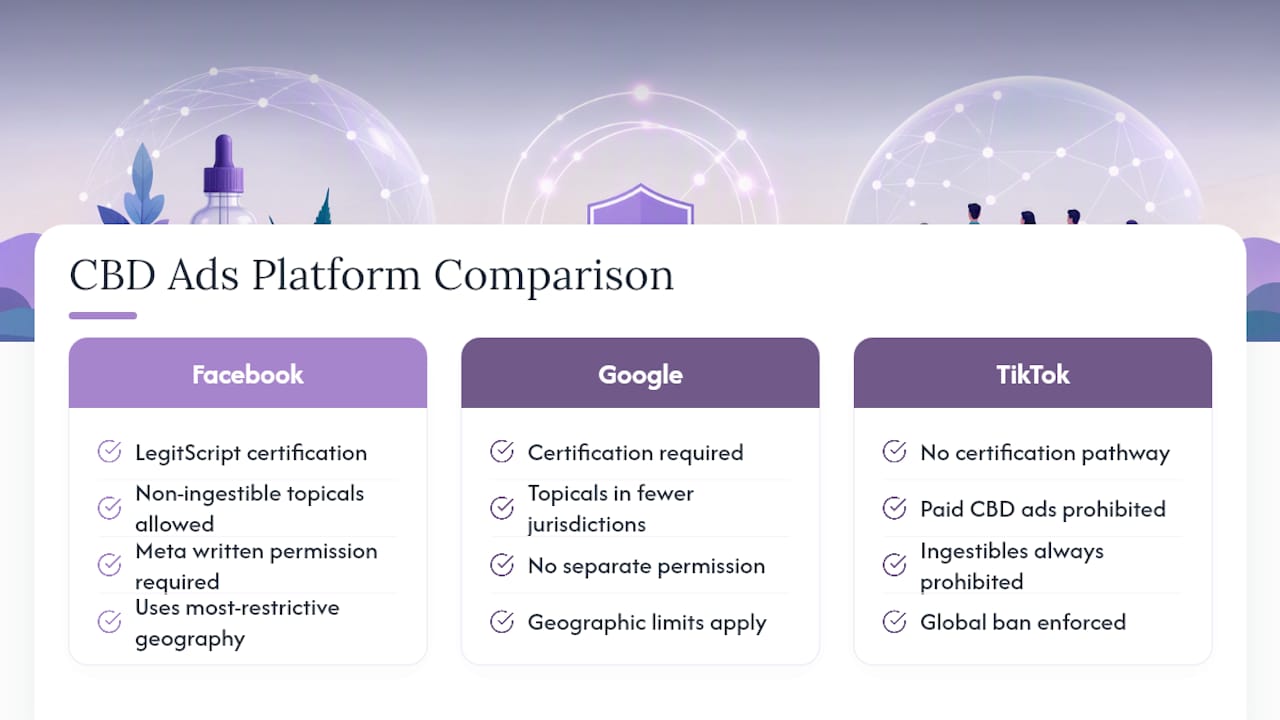
Geography adds another layer. A hemp-derived topical that’s fine to advertise in one country may still get blocked if Meta’s system detects the ad targeting a region where local law treats CBD differently. That’s less about Meta’s own preference and more about it defaulting to the most restrictive standard when unsure, which is worth knowing before you build a multi-country campaign around a single approved creative.
It helps to see where Facebook sits relative to other platforms. TikTok still prohibits paid CBD ads globally, no certification pathway exists there yet. Google allows topical CBD advertising in a narrower set of jurisdictions, also gated behind certification. Facebook’s LegitScript-plus-permission model is currently the most structured route among the major ad platforms, which is exactly why marketers gravitate toward it first even with its limits, even with its limits.
Landing Pages and Domain Hygiene: How to Pass Destination Review
Meta’s ad reviewers don’t stop at your creative. Their automated systems crawl your landing page, and increasingly your entire domain, looking for anything that contradicts what your ad claims to sell. This is where most CBD campaigns actually die, not in the ad copy itself.
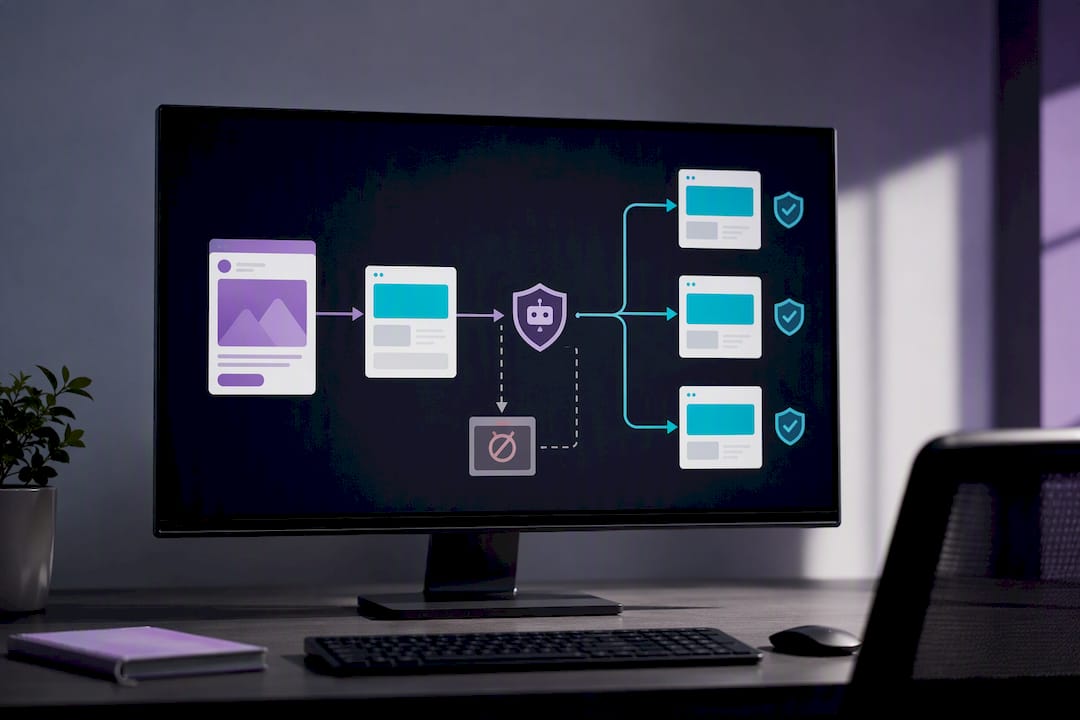
The core rule is destination match: everything your ad says has to be true on the page it links to, word for word in spirit if not verbatim. If your ad promotes a topical balm and your landing page also lists a CBD-infused ingestible drink three scroll lengths down, the crawler can flag the whole domain. It doesn’t matter that the ad itself was compliant.
Here’s the practical sequence to get this right:
- Audit your full domain, not just the landing page URL in the ad. Automated scanners aren’t limited to the exact link; they can follow internal navigation.
- Remove or gate any reference to ingestibles or THC products anywhere a crawler might reach them, including footer links, blog posts, and product recommendation widgets.
- Present lab COAs and product specs factually. State cannabinoid content, extraction method, and batch testing results without wrapping them in language that implies treatment or cure.
- Segment your site architecture. Use a separate subdomain or a gated storefront for anything ingestible or THC-adjacent, keeping the ad-linked pages strictly topical and compliant.
- Recheck your terms and conditions page. Buried claims in boilerplate legal text still count as content Meta’s system can index.
The most reliable long-term fix is structural, not cosmetic. Building a dedicated, gated funnel for your Facebook-linked traffic, separate from your broader catalog, is what most experienced CBD advertisers land on eventually. It’s more setup work up front, but it isolates the compliant portion of your business from anything that could trigger a domain-wide flag later.
Creative and Copy Rules: What Gets Rejected and What Works Instead
Meta’s review system is trained to catch specific language patterns, and CBD advertisers keep tripping the same wires. Knowing the exact phrases to avoid, and what to say instead, saves you weeks of resubmissions.
Avoid these claim types entirely, along with close variations:
- “Treats,” “cures,” “heals,” or “relieves” any named medical condition (anxiety, arthritis, chronic pain).
- Any comparison to pharmaceutical drugs or implied FDA endorsement.
- “Get high,” “psychoactive effects,” or any language suggesting intoxication.
- Dosage language framed as medical instruction (“take 2 daily for pain”).
- Testimonials describing a specific health outcome.
Compliant rewrites keep the benefit but shift the frame from medical to experiential: “Formulated to support recovery after a workout” instead of “relieves muscle pain.” “A calming addition to your evening routine” instead of “reduces anxiety.” The product story stays intact; the medical promise disappears.
Imagery follows the same logic. Skip cannabis leaves, smoke, rolling papers, pill bottles, or anything that visually reads as consumption. Lean instead into lifestyle shots (someone applying a balm after a run), texture close-ups of the product itself, or clean product photography against neutral backgrounds. Educational and lifestyle-based creative consistently clears review more easily than direct-sell imagery, and it tends to perform better with cold audiences anyway, since it doesn’t read as an ad in the traditional sense.
Keep your CTA and landing flow in the same educational lane. “Learn how it’s made” or “See the lab results” outperforms “Buy now, feel better” both in approval odds and, often, in click quality.
Pro Tip: Run two creative variants at once, one strictly educational and one lifestyle-focused, with identical targeting. Track which one draws automated review flags over a week before scaling either. This tells you which creative style your specific account’s history is more sensitive to, since enforcement patterns vary account to account.
Audience and Campaign Settings That Reduce Policy Flags
Age-gating isn’t optional. Meta requires 18+ targeting on any CBD ad, and you enforce it directly in Ads Manager’s audience settings, not through a landing-page disclaimer alone.
Beyond age, a few targeting habits keep your account out of the automated scrutiny lane:
- Avoid stacking interest categories tied to medical conditions (chronic pain, anxiety disorders) since that combination reads as health-claim targeting even when your creative doesn’t say it outright.
- Build lookalike audiences from purchase data rather than broad interest targeting, which keeps you further from flagged clusters.
- Rotate creative every 5 to 7 days rather than letting one ad run for weeks; fresh creative gets fresh review, but stale creative sitting too long sometimes triggers re-review at inconvenient moments.
- Pace new campaign launches gradually (small daily budget increases) rather than launching at full spend, since sudden volume spikes on a new CBD account draw more automated attention.
- Log every rejection with a screenshot and timestamp in a shared document, so you have a paper trail ready if you need to escalate an appeal.
Why Ads and Accounts Get Rejected (And How to Fix It)
Most CBD ad rejections trace back to three repeatable causes, and each has a specific fix.
- Destination mismatch. Your ad copy says one thing, your landing page implies another. Audit every linked page against your ad claim word by word, then check every internal link on that page for stray references to ingestibles or THC products.
- COA and lab documentation problems. If your Certificate of Analysis isn’t visible, current, and clearly linked to the batch being sold, Meta’s reviewers (and its automated system) treat that as a red flag. Store COAs on a dedicated, crawlable page, updated per batch, with no medical language wrapped around the data.
- Imagery and keyword triggers. Automated scanning tools catch leaf icons, smoke effects, and banned words even inside image alt text or metadata, not just visible copy. Run a full content audit including image files, not just headline text.
If your account or domain gets flagged despite fixing these, don’t just resubmit the same creative and hope. File an appeal through Meta’s support flow, referencing the specific policy section you believe you comply with. While that’s pending, build a sandboxed, fully compliant funnel on a fresh domain so your organic and email traffic isn’t dependent on the flagged property. Domain-level flags are sticky, and rebuilding around it is often faster than waiting out an appeal.
Compliance Checklist and Timeline Before You Apply
Getting from zero to an approved CBD ad account takes real lead time, and rushing it is the most common reason launches slip past their planned date.
Your documentation folder needs:
- Business registration documents proving your legal entity and operating jurisdiction.
- Lab COAs for every product SKU you intend to advertise, current and batch-specific.
- LegitScript application materials, including product formulations and manufacturing details.
- Terms and conditions and privacy policy pages, written without embedded medical claims.
- Payment processor and insurance verification, since some LegitScript reviews ask for proof your business banking is stable and compliant.
Expect 4 to 8 weeks just to gather this material and get through LegitScript’s own review before you even reach Meta’s written-permission step, which adds its own review window on top. The advertisers who move fastest run tasks in parallel: while LegitScript reviews your application, build your compliant landing pages, capture your lifestyle creative, and grow an email list through organic content so you’re not standing still during the wait.
Pro Tip: Before you submit anything to LegitScript or Meta, run your own site through a policy self-check: search your domain for banned phrases, review every image for prohibited imagery, and confirm your COAs are current. Catching your own mistakes before a reviewer does saves an entire review cycle.
Practitioner Notes: When Compliance Work Needs a Specialist
The domain-level flag is the trap that catches even careful advertisers. You can build a perfectly compliant ad and landing page, then get shut down because a blog post from two years ago mentions an ingestible product line you no longer sell. Meta’s crawler doesn’t know your intent, only what it finds.
A few honest signals tell you it’s time to bring in specialized help rather than keep troubleshooting solo:
- You’ve been rejected more than twice for reasons that seem inconsistent with your last approved ad.
- You’re selling across multiple jurisdictions with different CBD rules and need targeting logic more complex than basic geo-exclusion.
- Your product line spans both topicals and ingestibles, and keeping them cleanly separated across your site architecture is eating more time than running the campaigns.
This is where a service built specifically around ad approval for restricted categories, like Cloaking Ads, earns its cost. Cloaking, used responsibly, means routing reviewers and automated crawlers to a fully compliant version of your funnel while your real customer experience stays intact elsewhere, always within platform terms rather than around them. It’s an operational technique, not a workaround for selling something Meta genuinely prohibits.
Is Facebook Advertising Even a Sustainable Channel for CBD Brands?
Here’s the uncomfortable truth: chasing Facebook ad approval can become a full-time job that distracts from building a business that doesn’t depend on one platform’s mood. Paid reach on Meta is real, but account-lifetime risk is real too, and a permanent ban wipes out sunk costs instantly.
My take: treat Facebook as one test channel among several, not the foundation. Prioritize owned channels, email lists, organic content, and education-driven funnels first, since they survive policy changes Meta makes unilaterally. Run paid CBD tests conservatively, on a secondary account, once your compliance documentation is airtight, not before.
— Umar
How Cloaking Ads Helps You Launch CBD Campaigns Faster
Some services offer CBD advertisers a faster, more direct path to running paid campaigns than building compliance infrastructure alone, which usually means months of trial-and-error resubmissions before an account stabilizes. Instead of guessing which page structure or creative variant will survive Meta’s automated review, you get a setup built around routing reviewers to a compliant experience while your real funnel stays untouched.
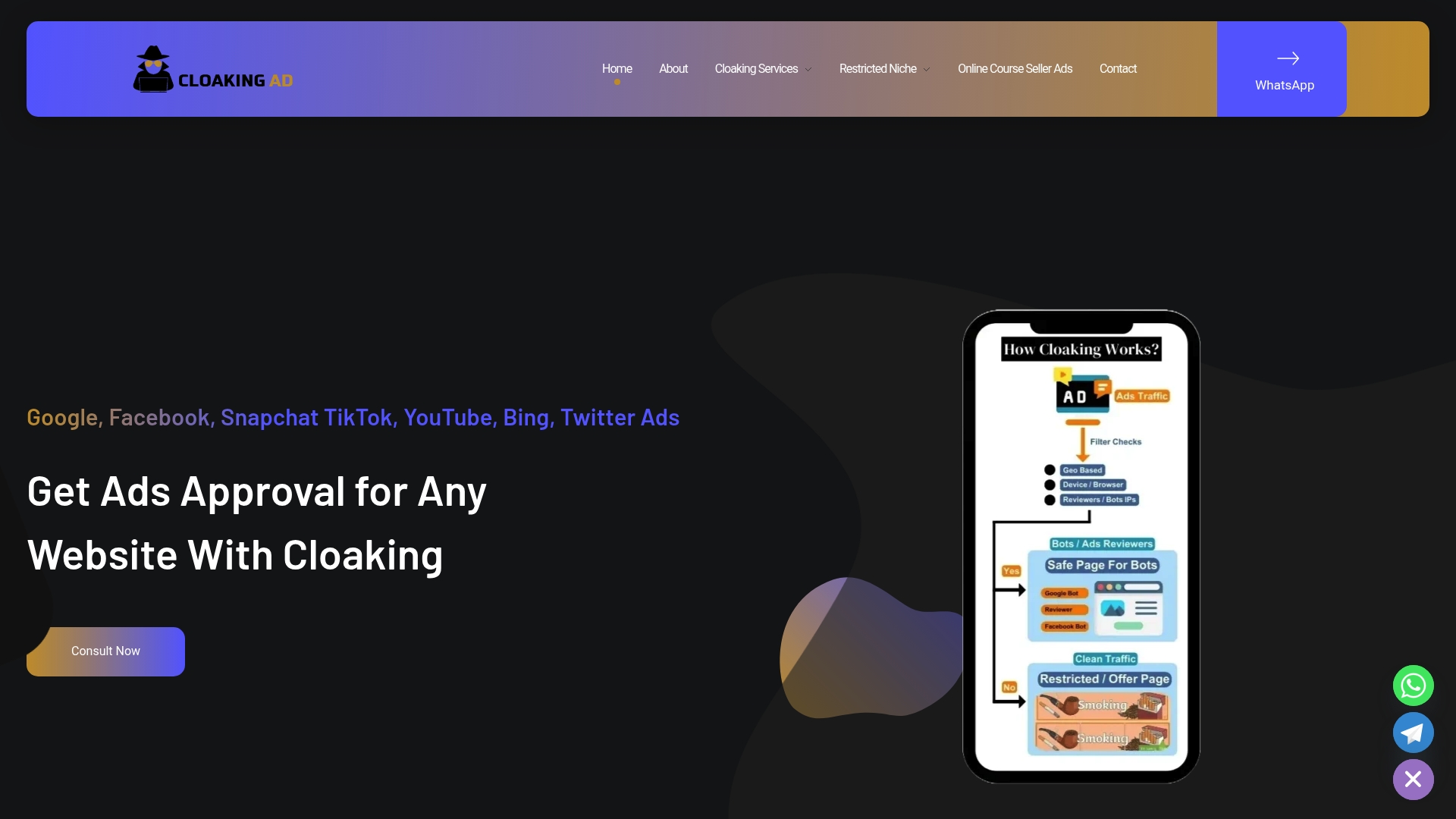
Three service tiers map to where you are right now. A consultation call helps you diagnose why past campaigns failed before you spend another dollar on ad spend. The cloaking system setup, priced at $1,599 one time, builds the server-side infrastructure and safe landing pages that keep your domain clean under automated scrutiny. For brands that want ongoing account management on top of that setup, the Done-For-You service runs $3,599 one time and includes continued monitoring so a single flagged creative doesn’t take down your whole account.
Before your first call, have your product list, current landing pages, and any past rejection notices ready. That’s what lets Cloaking Ads diagnose the actual bottleneck instead of guessing at it.
Official Policy Pages and Verification Resources to Bookmark
Keep Meta’s Cannabis and Cannabis Derived Products policy page and Meta’s CBD advertising policy announcement bookmarked as your primary references. LegitScript’s own certification portal remains the required first stop for eligibility. For cross-platform context, the hemp and CBD advertising comparison across Google, Meta, and TikTok is worth a periodic reread as policies shift.
Sources
- About Meta’s Cannabis and Cannabis Derived Products policy
- Advertising Hemp & CBD on Google, Meta & TikTok in 2026
- Examples of CBD Ads on Facebook
- How to Advertise CBD on Facebook in 2026
FAQ
Why am I suddenly getting CBD or hemp ads on Facebook?
Meta’s LegitScript-plus-permission pathway, active since mid-2023, lets certified advertisers run non-ingestible CBD ads, so you’re likely seeing them because Meta’s targeting matched your profile to a certified brand’s audience. It doesn’t mean CBD ads are unrestricted; it means specific brands cleared a certification process most advertisers skip.
How do I legally sell CBD products online?
Legal requirements vary by country and even by state or region, so confirm your local hemp and CBD laws before selling anything. For advertising specifically, non-ingestible products need LegitScript certification and written Meta permission; ingestible CBD generally can’t be advertised in paid Facebook campaigns regardless of where it’s legal to sell.
What am I not allowed to advertise on Facebook?
Beyond CBD specifics, Facebook prohibits ads with health or cure claims, ingestible cannabis products, and any THC content above trace hemp limits. For CBD specifically, non-ingestible topicals are the only eligible category, and only after LegitScript certification and Meta’s written approval.
How long does CBD ad approval actually take on Facebook?
Plan for 4 to 8 weeks just to gather documentation and clear LegitScript review, with additional time for Meta’s own written-permission step. Advertisers who parallel-track their landing page builds and content production during this window launch faster once approval comes through.
Can Cloaking Ads guarantee my CBD ads get approved?
Cloaking Ads specializes in setting up compliant landing infrastructure and server-side routing to reduce rejection risk for high-risk categories like CBD. Pricing for the cloaking system setup starts at $1,599 one time, with managed campaign support available for brands that want ongoing monitoring beyond the initial setup.