
Snapchat ad cloaking means showing Snap’s reviewers and bots one landing page and showing real users another. Snap prohibits it, and its review looks at the landing page, not just the creative. Below: how cloaking works, how it gets caught, which niches are tempted by it, and what we tell restricted-niche advertisers to do before they touch a cloaker.
TL;DR
- Snapchat ad cloaking is a traffic filter: reviewers and bots see a clean page, selected visitors see the real offer.
- Snap treats it as deceptive content. Enforcement can mean rejected ads or an immediate account suspension, and it is not tied to a published strike count.
- Detection is portfolio-wide. One violation can spread to linked accounts, domains and payment methods.
- Approval today does not mean approval tomorrow, because ads are re-reviewed after they go live.
- Restricted niches (CBD, peptides, supplements, crypto) should audit the funnel first and treat any technical filtering as a risk decision, not a trick.
Table of Contents
- What Snapchat ad cloaking actually is
- What Snap’s rules say
- How review catches cloaked pages
- The risk is the whole account structure
- Our perspective
- A safer pre-launch checklist for Snapchat
- When a managed setup makes sense
- What to do if your Snapchat ads are rejected or suspended
- FAQ
- Sources
What Snapchat ad cloaking actually is
A cloaking setup sits in front of your landing page. When a click arrives, it checks signals such as IP range, device, headers, referrer and behavior, then sorts the visitor. Visitors who look like Snap’s reviewers or scanners get a “safe” page. Everyone else gets the real page. That is the whole mechanism, and the rest is detail about how well the sorting works.
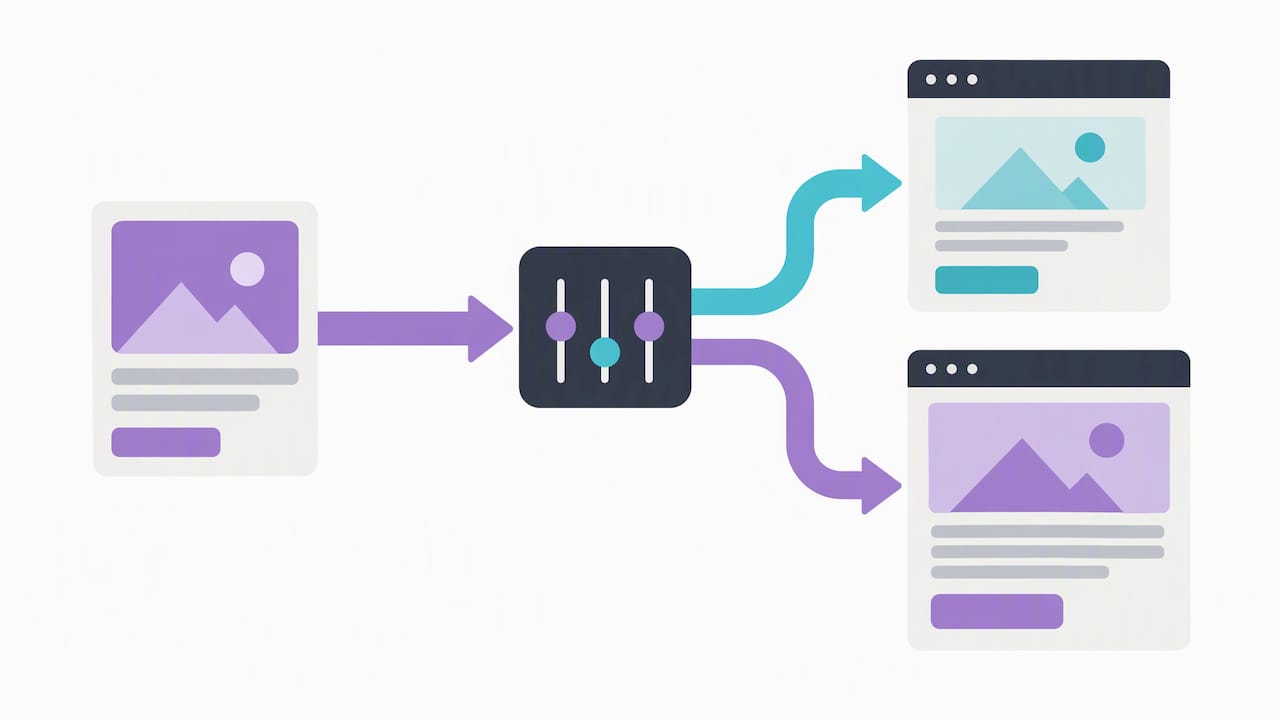
The safe page is usually a bland blog post, a compliant product page, or a simplified offer. The money page is the one with the claims, the product or the offer that would not pass review.
Two things are often confused:
- Link cloaking: a branded redirect that hides a long or affiliate URL. Legitimate in many cases, as long as the ad, display URL and final destination match what the user is told. We break down the difference on our link cloaking vs. ad cloaking page.
- Ad cloaking: showing platform reviewers different content than users. This is what Snap’s policy targets.
What Snap’s rules say
Snap’s Advertising Policies apply to every part of an ad, including the creative and the landing page, and advertisers are responsible for all of it. Its Deceptive Content policy is the one cloaking runs into. Snap says it reserves the right to reject ads or suspend accounts when it finds violations, and it does not publish how many strikes you get.
The practical reading: there is no safe grace period. A cloaked page that is found is not treated like a typo in your copy.
Regulated categories get the hardest look
Cloaking demand comes mostly from categories Snap restricts. Snap’s Illegal or Regulated Activities policy covers products and activities that undermine public safety, and CBD, THC, tobacco, vapes and non-FDA-approved substances such as injectable peptides fall into prohibited or tightly regulated territory. Supplements that make medical or weight-loss claims draw the same scrutiny.
That is why the question “does Snapchat ad cloaking work” matters less than “what happens when it stops working”.
How review catches cloaked pages
Older cloakers relied on IP lists and user-agent strings. Review systems have moved on. HUMAN Security describes modern detection as behavioral analysis across many signals, including user journey and redirect behavior, rather than simple code scanning. Their research on cloaking in malvertising also shows why: attackers use the same hide-until-safe logic, so platforms and security vendors invest heavily in spotting it.
Common ways a cloaked setup gets exposed:
- Paired fetches. The platform loads the same URL from different environments and compares the results. A mismatch is the evidence. We cover this in how paired fetches expose hidden destinations.
- Device and network fingerprints. Filters that key on device details can be probed by reviewers who rotate those details. See our device cloaking risk checklist.
- Post-approval re-review. Automated systems keep checking after launch, so an ad that passed on day one can fail on day nine.
- Complaints and user reports. A real user who lands on a page that does not match the ad can flag it, and no filter prevents that.
The risk is the whole account structure
The most expensive part of a cloaking failure is rarely one rejected ad. According to one 2026 analysis of cloaking economics, platforms link ad accounts, business managers, pages, domains and payment instruments, so a violation can cascade across associated assets and make future accounts tied to the same infrastructure harder to keep alive. The same piece argues that cloaking may work for a single ad on a single day but fails as a repeatable business, and that there is no warm-up period or spend level that earns immunity from review.
Treat that as one analyst’s view rather than a Snap statement. It fits what Snap’s own policy language implies, though: the landing page is part of the ad, and enforcement depends on severity and account history.
Costs to count before you decide
| Cost | What it looks like in practice |
|---|---|
| Lost ad spend | Campaigns stop mid-flight, learning resets |
| Account loss | Suspension with limited recourse for deceptive content |
| Linked assets | Domains, payment methods and related accounts flagged |
| Setup rebuild | New domains, servers, pages, tracking |
| Legal exposure | Deception can also draw consumer protection attention |
On the last row: the FTC’s enforcement policy on deceptively formatted ads rests on whether a reasonable consumer is misled about an ad’s nature or source. That statement is about ad formatting, not cloaking by name, but the principle applies to any funnel that hides what it is. Our own summary of platform bans and FTC scrutiny goes further into the legal side. This is general information, not legal advice. If your product is a regulated one, talk to an attorney who handles advertising law.
Our perspective
We run a cloaking service, so you might expect us to say cloaking is the answer. It is not, at least not first. Here is how we look at Snapchat specifically.
Snapchat is one of the harder platforms for restricted offers. The audience skews young, Snap rejects anything aimed at children under 13 under its General Requirements, and its review reads the landing page as part of the ad. Most of the rejections we see are not mysterious. They come from claims on the page, missing disclosures, mismatched ad and page messaging, or a product category Snap simply does not accept.
So our order of work is:
- Audit the funnel. Fix what is fixable: claims, disclosures, page structure, ad-to-page match. Many accounts get unstuck at this step without any filtering.
- Decide whether the category is addressable at all. If Snap prohibits the product outright, no setup changes that, and we say so.
- Only then discuss technical setup. That means server configuration, safe landing pages and real-time bot and reviewer detection, with the owner understanding the platform-ban risk described above.
We do not tell clients that cloaking is risk-free. It is not, and anyone who says so is selling you something. What we can offer is a careful setup, platform-specific knowledge across Google, Facebook, TikTok, Snapchat and others, and ongoing support to keep accounts running. Our own deeper write-up on why audits often beat cloaking in restricted industries sums up where we land.
— Umar
A safer pre-launch checklist for Snapchat
Whether or not you ever use a filter, run these checks before submitting for review. They are the same ones we use in our Snapchat ad review checklist.
- Match the ad to the page. Same product, same price, same claims. A mismatch is the fastest way to a deceptive-content flag.
- Strip unsupported claims. Disease, cure, guaranteed weight loss and “doctor-recommended” language get products rejected.
- Check the category list. Compare your product with Snap’s regulated-activity policy before you build anything. If it is listed as prohibited, stop.
- Show the basics on the page. Business name, contact details, terms, privacy policy, refund terms, and honest product descriptions.
- Test the page as a stranger. Open it on mobile, on a fresh browser, from a different network. If the experience changes in ways the ad does not explain, you have a problem.
- Separate your assets. Do not reuse domains or payment methods tied to banned accounts.
- Plan for re-review. Keep screenshots of the approved version and change nothing major without resubmitting.
Niche notes
CBD and hemp. Snap treats CBD as prohibited or highly regulated, so “how do I get CBD ads approved” often has a hard answer. Our Snapchat CBD prelaunch checks cover what can and cannot be done.
Peptides. Injectable peptides that are not FDA approved sit in the prohibited bucket. Educational or research-framed content is judged on its claims and destination, and our peptides ads approval page explains how we approach it.
Crypto and forex. These carry their own financial advertising requirements. Disclosures, risk warnings and jurisdiction targeting matter more than any filter.
Affiliate offers. Branded redirects can be legitimate when the ad, display URL and final URL tell the same story. Cloaking becomes the problem when the redirect hides the offer, the advertiser or the terms, as this guide to affiliate link cloaking explains.
When a managed setup makes sense
Some advertisers still decide, with open eyes, that they need server-side setup and ongoing management. That is a business decision with consequences, and it should be made with an operator who knows platform behavior. If that is you, here is what we offer:
- Consultation call. We review your niche, platforms and funnel and tell you whether Snapchat is realistic. No price is published for the call.
- Setup Cloaking System, 1599 one-off. Custom cloaking setup and server configuration with safe landing pages and real-time bot and reviewer detection. See the services page.
- Done-For-You, 3599 one-off. The managed engagement, where we handle setup and ongoing ad account management so you can focus on product and offer. Start from our main page.
We work with CBD, crypto, forex, supplements, peptides, replicas, pharma and affiliate offers across Google, Facebook, TikTok, Snapchat and more. Our 24-hour approval turnaround is the target we work to, not a promise that any platform will approve any product.
What to do if your Snapchat ads are rejected or suspended
- Read the rejection reason in Ads Manager and map it to a specific policy section.
- Fix the cause, not the symptom. If the issue is a claim on the page, resubmitting the same page changes nothing.
- Do not spin up identical accounts using the same domain, payment method or page. Linked assets make things worse.
- Use the appeal process if you believe the decision was wrong, with evidence of the compliant version.
- Get a second pair of eyes. An outside audit often spots issues you have stopped seeing.
If you want that audit, book a consultation and bring the rejection notice and the live page.
FAQ
Does Snapchat allow ad cloaking?
No. Snap’s policy treats circumventing ad review as deceptive content, and the landing page is part of what is reviewed. Violations can lead to rejected ads or account suspension, and Snap does not publish a fixed strike count.
Can Snapchat detect cloaking?
It can, and detection keeps improving. Review systems compare what different visitors see and keep re-checking ads after launch, so passing the first review does not make a setup safe. Behavioral and fingerprint-based detection is now standard in the industry.
Can I run CBD or peptide ads on Snapchat?
Often not as written. Snap lists CBD, THC, tobacco, vapes and non-FDA-approved substances such as injectable peptides as prohibited or highly regulated. Check the policy for your exact product first, and talk to us if you are unsure whether a compliant version of your offer exists.
What is the difference between ad cloaking and link cloaking?
Link cloaking masks a URL, often for tracking or branding, and can be legitimate when the destination matches the ad. Ad cloaking shows reviewers something different from users, which violates platform rules.
What happens to my other accounts if one is banned?
Platforms link accounts, domains, pages and payment methods, so a ban can affect associated assets. That is why we ask about your whole account structure before recommending anything.
Sources
- Snap Deceptive Content policy
- Snap Advertising Policies
- Snap General Requirements
- Snap Illegal or Regulated Activities policy
- HUMAN Security: Digital Disguise, Cloaking in Malvertising
- FTC enforcement policy statement on deceptively formatted advertisements
- Daily Intel Service: Does Cloaking Still Work in 2026?
- Daily Intel Service: How to Cloak Affiliate Links