
Yes, Snapchat allows limited CBD ads where legal, but only with strict age-gating, no medical claims, and often pre-approval through a dedicated form. Before you build a single creative, confirm the legal status of CBD in your target country and set the correct minimum age in Ads Manager. Those two steps determine whether your campaign has any chance of surviving review.
TL;DR:
- Verify CBD legality in every target country, exclude prohibited markets, document each decision, and select 18+, 21+, or 25+ based on the strictest local age rule.
- Keep creative and landing pages free of consumption imagery and medical or efficacy claims because reviewers reject pages that contradict compliant ads.
- Health or dietary CBD products may require Snap’s advertiser form and proof of local authorization, so submit requested documents before launch rather than after rejection.
- Test vertical creative in Campaign Lab, use a 9:16 format under 10 seconds, and check that the landing page loads properly on mobile.
- Snap’s standard review typically finishes within 24 hours, but regulated campaigns needing document checks can take longer; advertisers can appeal with supporting context.
Table of Contents
- Official Snapchat Policy: What the Platform Allows and Prohibits for CBD/Regulated Goods
- Age Targeting and Geography: Picking the Right Countries and Minimum Age Buckets
- Creative and Copy Rules: Wording, Imagery, and Safe Examples for CBD Ads
- Landing Page and Pre-Approval: What Reviewers Check and How to Submit Required Forms
- Ad Review, Common Rejection Reasons, and How to Appeal
- Campaign Pre-Submission QA Checklist (Ordered Steps to Minimize Rejection Risk)
- How We Handle Snapchat CBD Ad Approvals for Clients
- Is Snapchat Worth the Compliance Overhead for CBD Brands?
- Get Your Snapchat CBD Campaign Approved Faster
- FAQ
- Sources
Official Snapchat Policy: What the Platform Allows and Prohibits for CBD/Regulated Goods
Snapchat treats CBD as a regulated good rather than a banned category. According to Snap’s advertising policies, some limited ads for cannabis, CBD and related products are permitted where the product is legal, provided the campaign follows both Snap’s rules and all applicable local laws. That “where legal” clause matters more than any creative tweak: if CBD is restricted or banned in a country you’re targeting, no amount of clever copywriting gets the ad through.
The policy also draws firm lines around what the creative itself can show or claim. Snap’s health category requirements explicitly forbid depicting product consumption and disallow efficacy or medical claims for health and dietary products, a category CBD typically falls under.
The baseline rules break down like this:
- CBD ads are allowed only in markets where the product is legally sold and advertised.
- Creative cannot show anyone consuming the product, whether that’s vaping, smoking, or applying a tincture.
- Copy cannot claim the product treats, cures, or prevents any condition.
- Imagery and language must avoid provocative or suggestive framing.
- Advertisers of health or dietary products may need to complete Snap’s Health Related Products & Services advertiser form before launching.
That last point deserves attention early, because it’s often the step marketers skip. If your product reads as a health or dietary supplement, filling out the advertiser form before you build campaigns saves you from a rejection cycle that could otherwise eat days of review time.
Age Targeting and Geography: Picking the Right Countries and Minimum Age Buckets
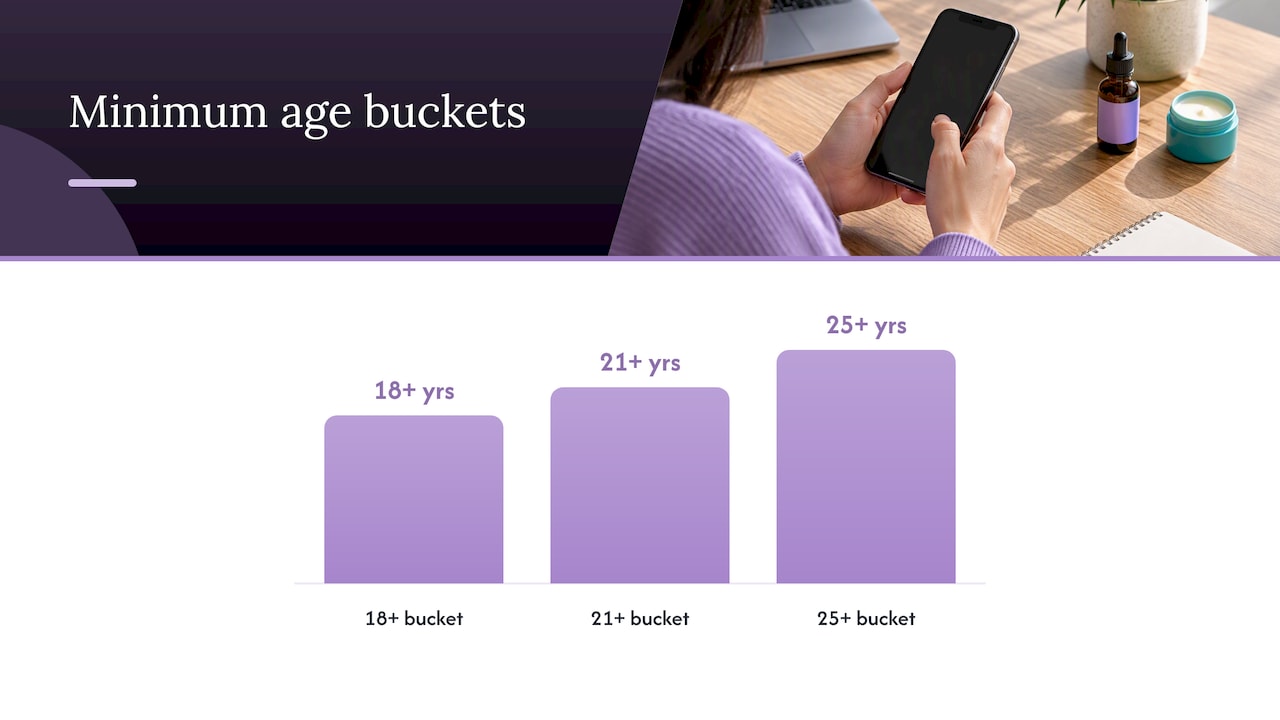
Snap’s Ads Manager gives advertisers three minimum age buckets for regulated products: 18+, 21+, and 25+. According to Snap’s minimum age guidance, advertisers are responsible for selecting the correct bucket, and Snap may automatically narrow delivery further to prevent policy violations, but that automatic narrowing is a backstop, not a substitute for your own targeting decisions.
Which bucket you pick depends entirely on the jurisdiction. A country that treats CBD like any other over-the-counter wellness product might only require 18+. A market with stricter cannabis-adjacent regulation could demand 21+ or even 25+ to stay inside local advertising law. There’s no universal answer here, which is why documenting your reasoning for each market matters.
- Research the legal status of CBD in every country on your targeting list, not just your home market.
- Match your minimum age setting to the strictest applicable local requirement, never the loosest.
- Exclude any region where CBD advertising is prohibited outright, even if Snap’s system would technically allow delivery.
- Keep a short record of the legal basis for each market you target, in case a reviewer or appeal requires it.
- Re-check your geo-targeting list periodically, since regulations shift faster than most ad campaigns get rebuilt.
Pro Tip: Build a simple spreadsheet mapping each target country to its CBD legal status, required minimum age, and the date you last verified it. It turns a compliance guess into a documented decision.
Creative and Copy Rules: Wording, Imagery, and Safe Examples for CBD Ads
Snap’s creative restrictions for CBD are specific enough to plan around, which is good news if you’re used to vaguer platform policies. The absolute no-go list includes any footage of consumption, including smoking or vaping motions, dropper-to-mouth tincture shots, or anything that visually implies ingestion. Direct health claims are equally off-limits: phrases like “relieves anxiety,” “cures insomnia,” or “treats chronic pain” will get flagged under the same rules that govern dietary supplement advertising.
Safe creative tends to lean on brand identity and neutral product description instead of promised outcomes. Compare the two approaches:
- Unsafe: “Finally sleep through the night with our CBD oil.”
- Safe: “Explore our full-spectrum CBD oil collection.”
- Unsafe: “Say goodbye to joint pain.”
- Safe: “Shop CBD topicals designed for everyday use.”
The pattern is consistent: name the product category, skip the promise. For guidance on reworking specific phrases that commonly trigger rejections, our medical claims policy breakdown walks through common rewrites that keep messaging factual rather than therapeutic.
A 2019 Digiday report on CBD advertising documented examples of CBD brands successfully running Snapchat campaigns under strict caveats: no THC mentions, no health claims, and age-gated targeting, which confirms the restrictions are workable rather than theoretical obstacles (Digiday).
Beyond wording, format matters. Snap’s own do’s and don’ts guidance recommends testing creative variants in Campaign Lab before committing budget, since a vertical video that feels native on Snapchat can still carry a claim or image that trips the review system. Running a controlled test catches that before it costs you a rejection on your main campaign.
Landing Page and Pre-Approval: What Reviewers Check and How to Submit Required Forms
Ad review doesn’t stop at the creative. Reviewers click through to your landing page, and a page that contradicts your compliant ad copy will sink the whole campaign. The page needs to mirror the same restraint as the creative itself.
A landing page built for CBD ad approval typically includes:
- Clear, factual product labeling with no therapeutic or medical claims anywhere on the page.
- Visible business details, including a real contact method and company information.
- Any regulatory approvals or authorizations relevant to the product and market, stated plainly.
- No imagery of consumption, matching the same restriction that applies to the ad creative.
- A mobile-first layout, since the overwhelming majority of Snapchat traffic arrives on a phone.
If your product falls into the health or dietary supplement category, this is also the point where Snap’s advertiser form comes back into play. The health category policy notes that these advertisers may be required to provide proof of authorization to advertise in a given jurisdiction before campaigns go live. Submitting that documentation early, rather than after a first rejection, shortens your path to an active campaign.
Format specs reinforce the landing page expectations: Snap’s guidance points toward 9:16 vertical creative under 10 seconds, built to feel native in the app rather than like a repurposed banner ad. A landing page that loads slowly or renders poorly on mobile undercuts an otherwise compliant ad, since reviewers and real users judge the full experience, not just the Snap itself. Our safe page examples show what this looks like in practice for restricted categories.
Ad Review, Common Rejection Reasons, and How to Appeal
Snap’s review process is centralized and typically completes within 24 hours, according to Snap’s own explanation of the ad review process. Complex submissions, including regulated-goods campaigns that trigger a policy flag or require pre-approval verification, can take longer, since a human reviewer often needs to check documentation rather than relying on automated screening alone.
When a CBD campaign gets rejected, the cause is usually traceable to one of a handful of recurring issues:
- Creative wording that implies a medical benefit, even indirectly or through a testimonial-style quote.
- Imagery showing consumption, including hands holding a product in a way that suggests use.
- A landing page that makes claims the ad itself avoided, creating a mismatch reviewers catch quickly.
- Targeting that includes a country or age group outside what local law permits for CBD.
- A missing or incomplete Health Related Products & Services advertiser form submission.
Each of these has a straightforward fix: strip the offending language or image, align the landing page with the ad, correct the targeting, or complete the form before resubmitting. If you believe a rejection was a mistake, Snap’s system allows you to review the stated reason in Ads Manager and file an appeal with supporting context. Our Snapchat ad review policy checklist walks through how to read rejection codes and structure an appeal that addresses the actual flagged issue rather than resubmitting the same creative unchanged.
Campaign Pre-Submission QA Checklist (Ordered Steps to Minimize Rejection Risk)
Running through a short checklist before you hit submit catches most of the issues that otherwise show up as rejections days later.
- Confirm CBD’s legal status in every targeted country and keep a written record of your compliance basis.
- Set your minimum age bucket, 18+, 21+, or 25+, to match the strictest relevant local requirement.
- Remove every consumption image and medical or efficacy claim from both the ad creative and the landing page.
- Submit the Health Related Products & Services advertiser form if your product falls under health or dietary categories, attaching any requested authorization documents.
- Test creative variants in Campaign Lab and click through your own ad on a mobile device to confirm the landing page loads correctly and matches your claims.
Pro Tip: Treat the landing page as part of the creative review, not a separate step. A reviewer who clicks through and finds a claim your ad avoided will reject the whole campaign, not just flag the page.
Running this sequence in order, rather than building creative first and checking compliance last, is the single habit that separates advertisers who get approved on the first pass from those stuck in a rejection loop.
How We Handle Snapchat CBD Ad Approvals for Clients
Getting a CBD campaign through Snap’s review process repeatedly, across multiple markets and age brackets, is a different task than getting one ad approved once. We built our CBD, Mushrooms, Hemp, Kratom, Vape ad approval service around that repeat-approval problem, combining cloaking setup with the compliance groundwork CBD campaigns need.
Our workflow for CBD clients typically covers reviewing creative and landing pages against current health and regulated-goods policies, building safe-page templates that keep product claims factual and remove consumption imagery, handling pre-approval form submissions and gathering requested documentation, and running iterative creative tests to correct flagged wording before it affects a live campaign. Engagement durations and adjustments vary as needed. The full service breakdown covers how consultation, setup, and managed approval engagements differ.
Is Snapchat Worth the Compliance Overhead for CBD Brands?
Snapchat’s audience and vertical video format make it a genuinely useful channel for CBD brands, not just a consolation prize compared to platforms that ban the category outright. The stricter review process is the real cost, and it’s one most in-house marketing teams underestimate until their third rejection in a week.
Where experienced teams save time isn’t in writing cleverer copy, it’s in the unglamorous parts: knowing which phrases trigger the health-claims filter before you spend a design cycle on a creative, and knowing how to structure an appeal so it addresses the actual flag instead of restating the same ad. Running CBD campaigns in-house works fine for a brand with one or two target markets and the patience to learn Snap’s review patterns through trial and error. It stops working once you’re managing multiple countries, age brackets, and a pre-approval form backlog at the same time, which is usually when a managed service earns its cost back in saved review cycles alone.
— Umar
Get Your Snapchat CBD Campaign Approved Faster
We built our CBD ad approval process specifically around the rejection patterns Snap’s review system produces most often, so you’re not relearning the same lessons campaign after campaign. A consultation call walks through your specific markets and product claims before anything gets submitted, and our cloaking system setup handles the technical configuration that keeps approved campaigns stable once they’re live.
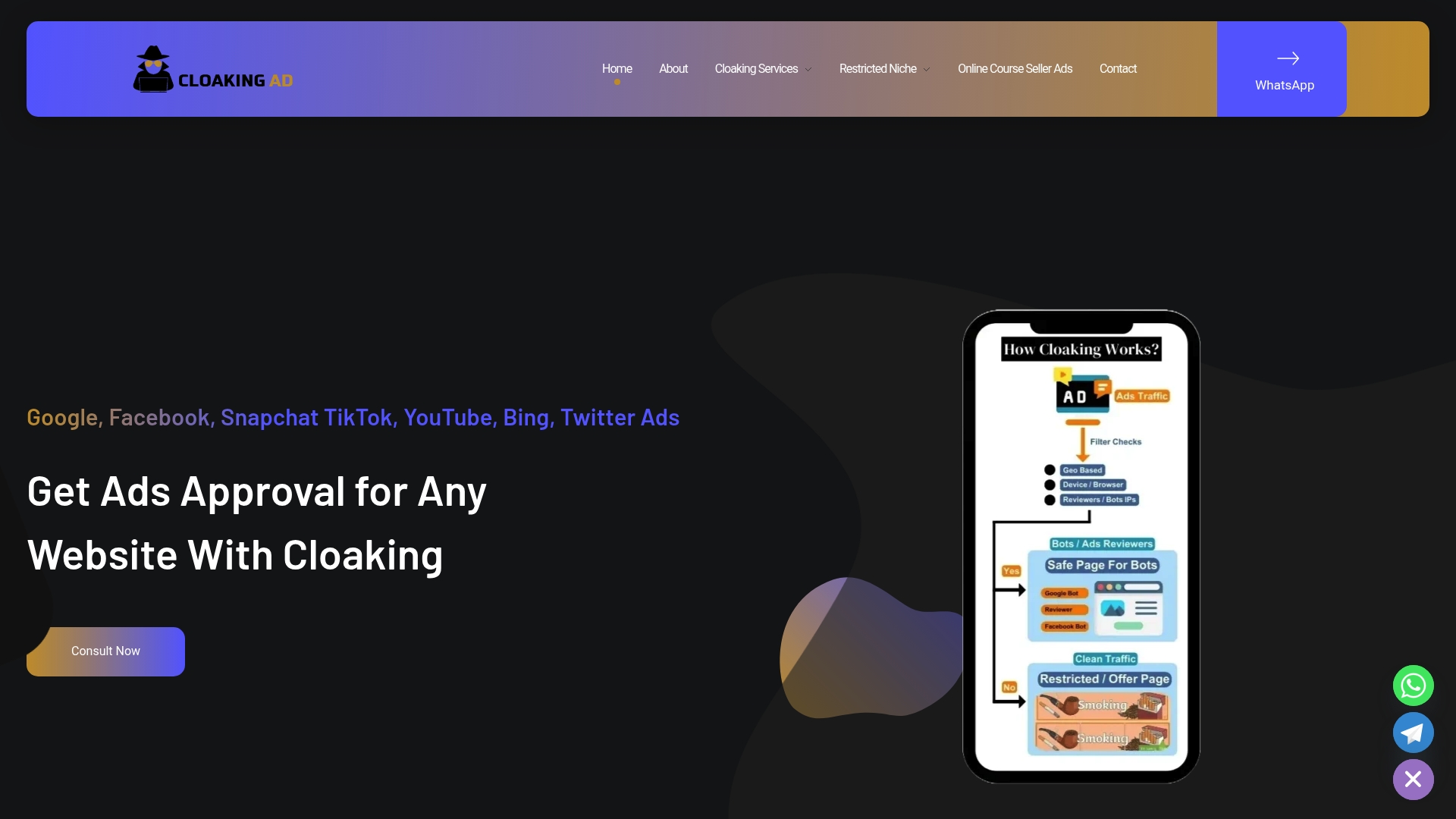
If you’d rather see what compliant structure looks like first, our safe page examples show real templates built for restricted categories like CBD. Every engagement starts from the same compliance-first baseline: confirm legality, strip the claims that trigger flags, and document the basis for every market you target. Book a consultation to go through your specific campaign before your next submission.
FAQ
Are ads on Snapchat safe?
Snap’s ad review process screens every submission against published advertising policies before it goes live, which includes checks for regulated categories like CBD. The process typically completes within 24 hours, and advertisers can see rejection reasons and appeal if a decision looks incorrect.
What are the unspoken rules of Snapchat advertising?
Beyond the published policy text, successful advertisers treat the landing page as part of the ad itself, since a page that contradicts compliant creative gets flagged just as often as the ad. Testing creative in Campaign Lab before full launch and documenting your legal basis for each target market are habits the policy doesn’t spell out but experienced advertisers rely on.
Why do targeted ads sometimes appear for things someone else in my household searched?
Ad platforms often target devices, accounts, and shared networks rather than a single individual, so ads can reflect browsing or purchase signals from anyone using a shared connection or device. This is a general pattern across ad platforms rather than something specific to CBD or Snapchat advertising.
How can I stop seeing ads on Snapchat?
Snapchat’s app settings include controls for ad preferences and personalization that let users limit how ads are targeted to their account. Checking the privacy and ads settings within the app is the most direct way to adjust what you see.
Do I need legal approval before running CBD ads on Snapchat?
You need to confirm CBD is legal in every country you plan to target, since Snap’s policy only permits these ads where the product is legally sold. Health or dietary CBD products may also require completing Snap’s advertiser form and providing proof of authorization before campaigns launch.
Sources
- Snap Advertising Policies
- Minimum age for ads – Snapchat Business Help
- Ads category requirements — Health — Snap values
- The do’s and don’ts of advertising on Snapchat — Snapchat for Business blog