
Twitter ads cloaking can help your campaigns clear X’s automated review, but only when reviewer detection is accurate and the reviewer view stays compliant. Enforcement from X, the European Commission and U.S. watchdogs like Check My Ads means the risk never reaches zero. A managed setup shortens time to approval. Run a staging test first, or book a consultation.
TL;DR:
- Combine network, client, and behavior signals, log each routing decision, and keep the reviewer page reachable, policy linked, and consistent with advertised claims.
- Map each ad claim to matching landing and reviewer pages, test reviewer signals side by side, and increase spend only after several clean review cycles.
- After a suspension, save logs, screenshots, and the exact disapproval, switch to compliant landing copy, pause scaled spend, appeal with evidence, and restart gradually.
- For one low risk test on a clean account, do it yourself; repeated rejections, prior strikes, rising spend, or restricted verticals favor managed support.
Table of Contents
- 1. What changed in X ad moderation and why it matters
- 2. How cloaking for X ads works under the hood
- 3. A safe cloaking checklist for X campaigns
- 4. Monitoring signals and what to do after a suspension
- 5. Examples of cloaking implementations that cleared review
- 6. When to DIY and when to hire a managed provider
- 7. How our consultation and setup services get X ads approved
- FAQ
- Sources
1. What changed in X ad moderation and why it matters
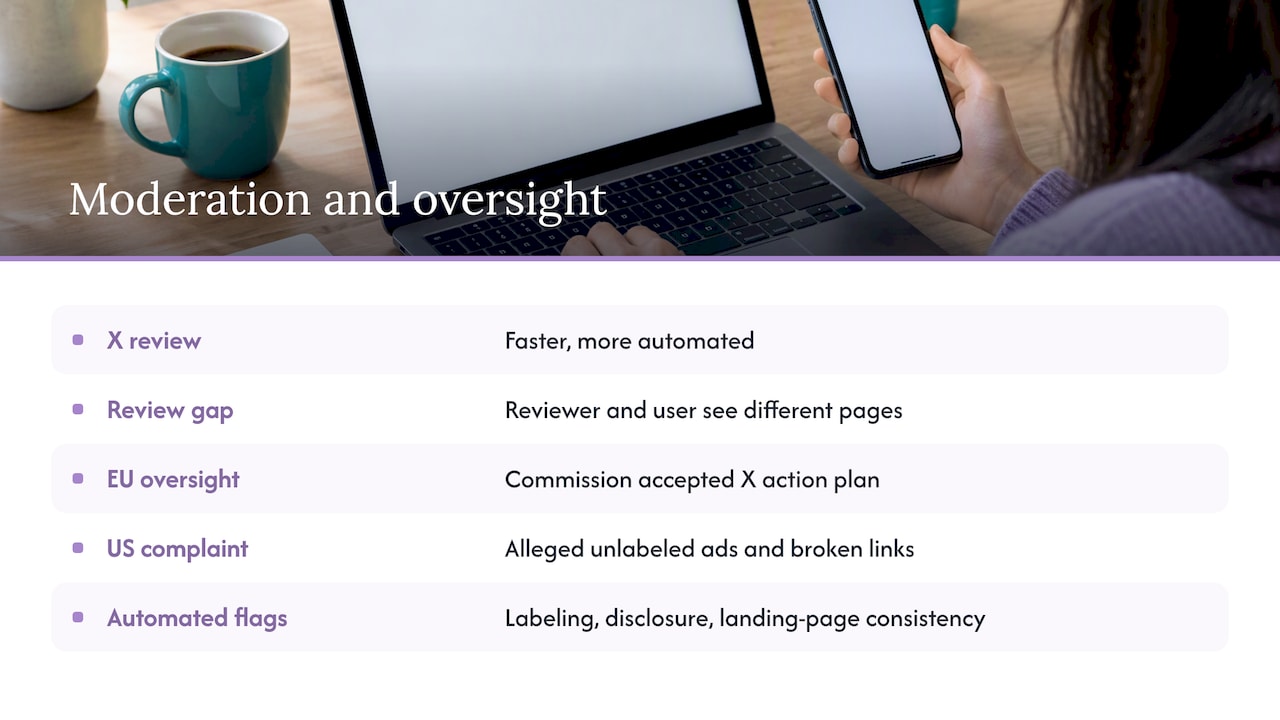
Since 2022, platform changes at X have shifted enforcement and user behavior, and advertisers are advised to monitor updates and run controlled tests when they alter tactics. Faster, more automated review produces more mismatches between what a reviewer sees and what a real user sees, and that gap is why cloaking became a common tactical response.
Oversight has tightened too. The European Commission has accepted X’s action plan under the Digital Services Act, which keeps ad transparency under scrutiny. In the U.S., Check My Ads filed an FTC complaint alleging unlabeled ads and broken disclosure links.
For you, that means review systems pay closer attention to labeling, disclosure and landing page consistency. A discrepancy between a submitted page and the final offer is exactly what automated checks flag. Our overview of legal and platform risks covers the regulatory side in more depth.
2. How cloaking for X ads works under the hood
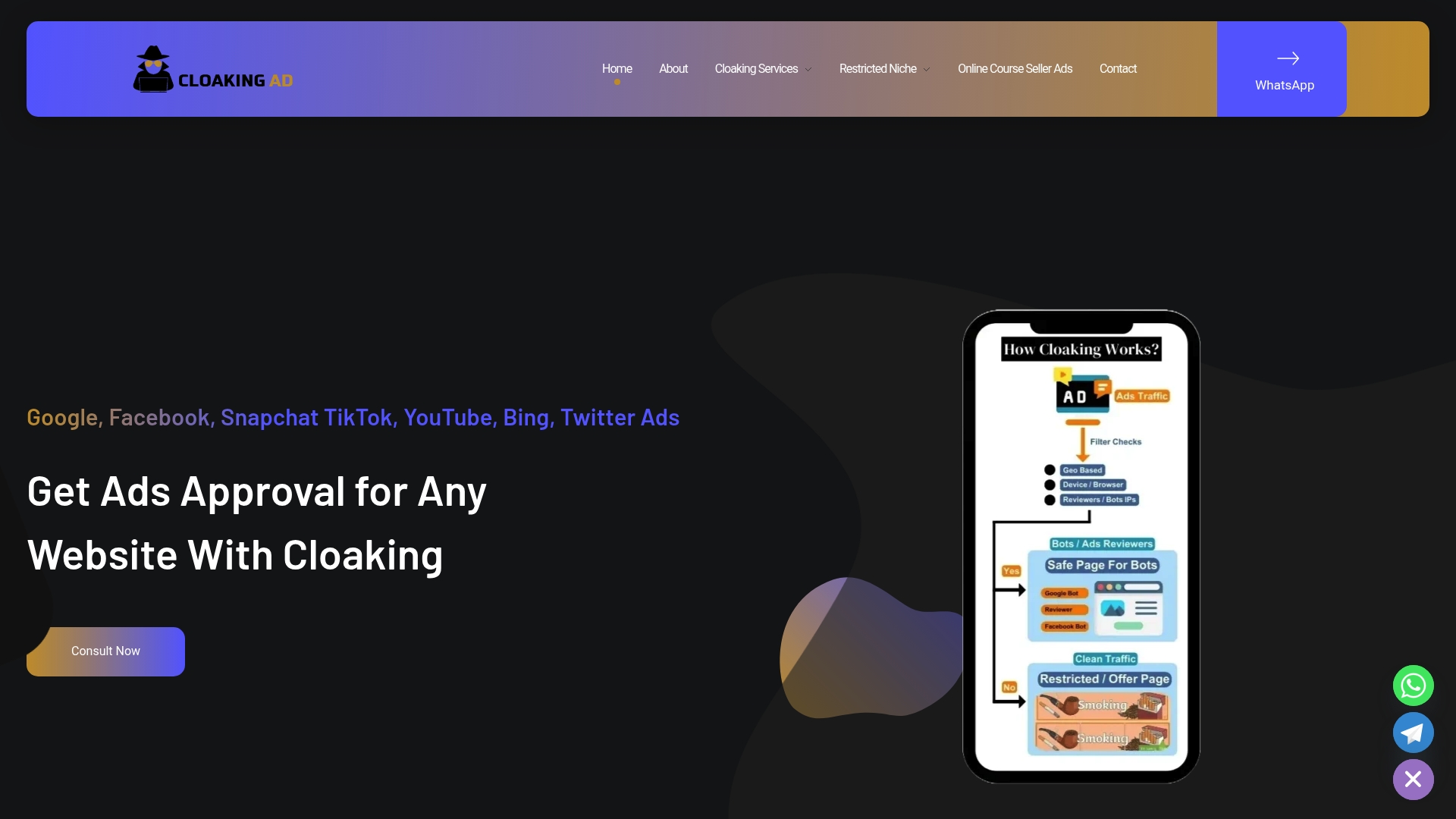
The flow is straightforward: the ad creative runs, a user clicks, a server detects who is clicking, and the visitor lands on either the reviewer view or the user landing page. Detection happens in the milliseconds between click and render.
Reviewer detection draws on a few signal families:
- Network signals: IP ranges and hosting-provider heuristics that suggest automated or review traffic.
- Client signals: user-agent strings and client hints, plus TLS fingerprints such as JA3. Our guide to device cloaking, JA3 and client hints goes deeper.
- Behavior patterns: no scrolling, instant exits, or unusual request timing.
No single signal is reliable alone, so strong setups combine several and log every decision. A false positive sends a real customer to the reviewer page. A false negative lets a reviewer see the wrong one.
The common techniques are server-side routing on the tracking domain, gated reviewer pages, and content parity. Parity matters most: the reviewer page should be a real, compliant page that reflects the product and claims being advertised, with working policy links. A reviewer page that is thin, broken or unrelated to the ad is the fastest route to a flag. Treat the reviewer view as a production asset, not a placeholder.
3. A safe cloaking checklist for X campaigns
Work through these steps in order, or hand them to your engineer or agency:
- Map before launch. Document every ad claim, the canonical landing URLs, and the reviewer-view page that matches each ad.
- Test detection. Simulate reviewer IP ranges and user-agent and client-hint combinations, then compare the reviewer render to the end-user render side by side.
- Harden the server. Use valid SSL, stable hosting, request logging, and access controls so reviewer pages stay reachable and your rules stay private.
- Check policy fit. Match ad copy and the reviewer page against the X ads policy and launch checks.
- Soft launch. Start with low-budget tests and a canary audience before any scaling.
- Scale in increments. Raise spend only after several clean review cycles.
Pro Tip: Keep a dated change log of every routing rule and page edit, so any disapproval can be traced to a specific change.
Creative still carries the campaign. Practical X ads guidance stresses strong visuals, one clear message per ad, and captions on video. Clean copy lowers detection risk because there is less for reviewers to question.
The timeline for a basic setup can vary depending on hosting and page complexity. Budget for ongoing monitoring afterward, since rules and signals drift. Our setup cloaking system service is priced at 1599 as a one-off.
4. Monitoring signals and what to do after a suspension
Watch these signals daily: review outcomes and disapproval reasons, landing mismatch rates between reviewer and user views, CTR anomalies, and account-health messages. A sudden CTR drop with stable spend often means traffic is being misrouted. Twitter’s own getting started guide recommends checking, tweaking and deleting underperforming creatives, and the same habit applies to routing rules.
If X suspends an ad or account, move in this order:
- Collect logs, screenshots and the exact disapproval message.
- Switch the affected ads to compliant landing copy.
- Pause scaled spend so one flagged asset does not drag down the account.
- Submit an evidence-backed appeal that references the logged facts.
- Reintroduce campaigns in stages, with a documented change log for any compliance audit.
Our audit for circumventing systems suspensions expands on the process.
5. Examples of cloaking implementations that cleared review
These are patterns we see in restricted verticals rather than named cases.
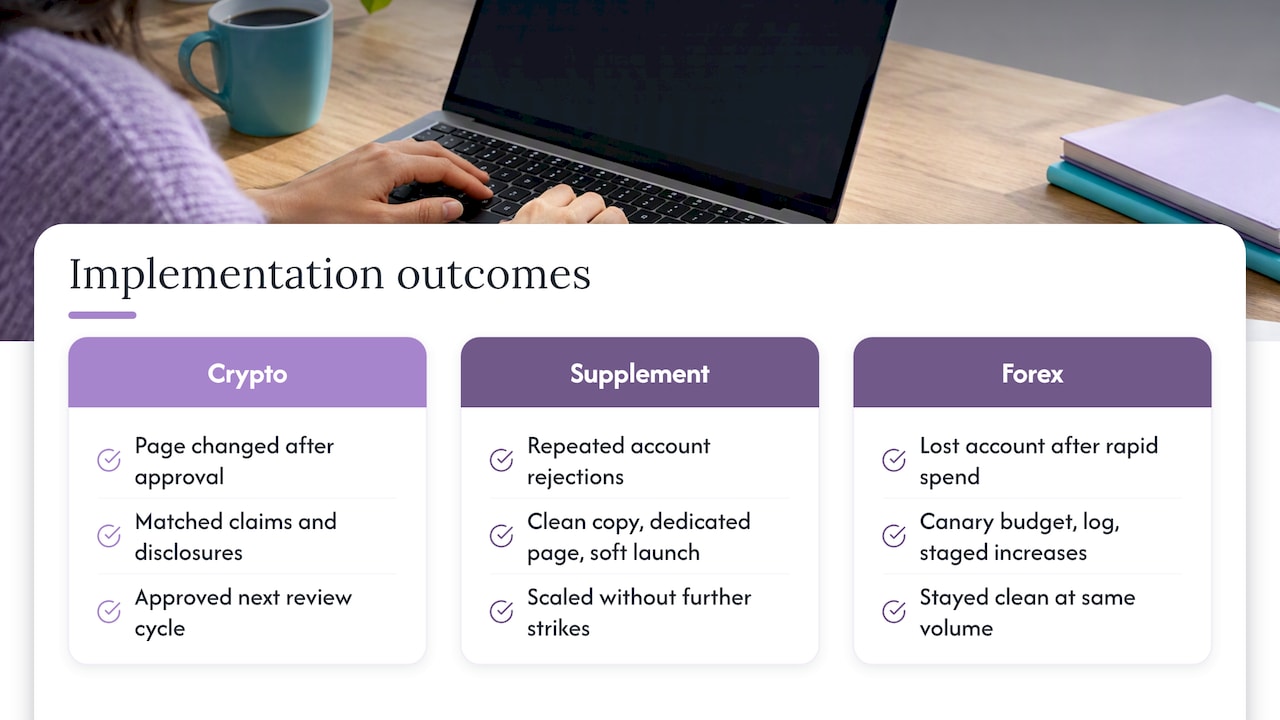
A crypto advertiser kept getting automated disapprovals because the landing page changed after approval. Once reviewer and user pages matched on claims and disclosures, and the reviewer page loaded reliably, approvals came through on the next review cycle. The fix was parity and uptime, not trickery.
A supplement brand ran through repeated rejections on a single account. Rewriting copy to remove implied health claims, pairing each ad with a dedicated compliant page, and soft-launching at low budget let the account scale without further strikes.
A forex affiliate lost an account after pushing spend too fast. The rebuilt account used a canary budget, a change log and staged increases, and stayed clean through the same volume.
The shared lesson is that approvals came from disciplined process: matched pages, clean creative, careful scaling. Your results depend on your vertical, account history and how closely your pages follow policy.
6. When to DIY and when to hire a managed provider
For a low-risk test with one clean account, DIY is reasonable. We’d move to managed when you see repeated rejections, scaling spend, or an account with prior strikes, because each mistake costs more as budgets grow. Restricted verticals have the least room for trial and error.
— Umar
7. How our consultation and setup services get X ads approved
We offer a consultation call, a done-for-you cloaking setup, and ongoing account support. On the call we diagnose why your ads are failing, map the reviewer and user flows, give you a realistic timeline, and lay out next steps. We don’t promise outcomes before we’ve seen your account.
The done-for-you package is 3599 one-off, and the setup-only service is 1599 one-off. Book a consultation and bring your latest disapproval messages so we can start with real data.
FAQ
Is cloaking Twitter ads allowed by X?
Circumventing X’s review systems may carry account risk. That risk is why we stress compliant reviewer views, careful testing and documented changes. Read the X ads policy summary before launching.
Can cloaking get an X ad account suspended?
Yes. The European Commission’s action on X’s transparency obligations shows how closely ads are watched, and discrepancies between submitted pages and final offers can trigger detection. Accurate reviewer detection and content parity lower that risk.
How long does a cloaking setup take?
The time a basic setup takes depends on hosting, page complexity and testing. Plan for a soft-launch period afterward, since scaling should wait for several clean review cycles.
What should I do first if my X ad gets disapproved?
Save the disapproval message, logs and screenshots, then switch the ad to compliant landing copy and pause scaled spend. After that, submit an appeal backed by your logged evidence.
Sources
- Digital-strategy
- Ads watchdog files FTC complaint against X, formerly Twitter, over unlabeled ads | TechCrunch
- X (Twitter) ads: The practical 2025 guide for social marketers
- How To Run X (Twitter) Ads: A Step-by-Step Guide – AgencyAnalytics