
A safe page is a policy-compliant, reviewer-facing landing page that presents neutral, substantiated content and prominent disclosures so ad platforms can approve the destination. It benefits any business in a restricted or high-risk vertical that needs an ad account to survive review without misleading the people who click through. Start by picking one of the templates below, then verify every claim has a disclosure and every disclosure sits in plain view.
TL;DR:
- Disclosures must be placed next to claims and be clear and conspicuous to ensure compliance and avoid manual review flags.
- Mismatched messaging between ad copy and landing pages, or undisclosed claims, can lead to suspension and are common violations.
- Safe pages should be neutral, fact-based, and include all necessary disclosures, with navigation that functions properly for humans and crawlers.
- Hyperlink-only disclosures are often insufficient; disclosures should be in plain view and directly accompanying claims.
- Most disapproval issues stem from implied therapeutic claims, buried disclosures, technical red flags, and inconsistent messaging, especially in restricted categories.
Table of Contents
- What reviewers check before approving your destination
- Safe-page patterns and copy templates you can adapt
- Pitfalls that get ads disapproved or accounts suspended
- How safe pages fit into a compliant cloaking workflow
- A practitioner’s take on responsible safe-page use
- How we help you build and manage safe pages that hold up
- FAQ
- Sources
What reviewers check before approving your destination
Ad reviewers and regulators look at the same three things: who is making the claim, what evidence backs it, and whether a visitor can see the disclosure without hunting for it. Google’s policy on circumventing systems explicitly disallows cloaking and requires that the destination a reviewer sees reflects the product or service actually being promoted. Its destination requirements go further, requiring functional navigation, original content, and no intrusive interstitials that block or confuse a visitor or a crawler.
The Federal Trade Commission holds health-related claims to a stricter bar. Its health products compliance guidance requires “competent and reliable scientific evidence” before a business makes a health claim, along with disclosures that are clear and conspicuous rather than buried. Microsoft Advertising applies a similar logic: responsibility does not stop at the ad copy. Landing page content can trigger enforcement on its own, regardless of what the ad itself says.
In practice, this means:
- Every claim on the page needs evidence behind it, not just a plausible sound.
- Disclosures sit next to the claim they qualify, never in a footer link alone.
- Navigation works, pricing is visible, and the page matches what the ad promised.
- Crawlers and human reviewers see the same content a buyer would see.
Even a minor mismatch between ad copy and landing page can trigger a manual review flag on major platforms, according to Google’s destination requirements, which treat inconsistency between what’s promoted and what’s delivered as a core violation.
Safe-page patterns and copy templates you can adapt
Three structures cover most restricted-vertical use cases. Each keeps the commercial intent visible, which is what reviewers expect, while avoiding language that implies something the business cannot substantiate.
- Neutral informational product page. Lead with a short, factual product description: what it is, how it’s used, and who it’s for. State allowed benefits in feature terms (“contains 500mg of ingredient X per serving”) rather than outcome terms (“cures,” “eliminates,” “guaranteed results”). Show price and a working purchase path. Place a disclosure directly under the main claim, not in a hyperlink at the bottom.
- Educational pre-lander. Open with a high-level overview of the industry or category, then a clear “what this product is” and “what this product is not” section. Include required warnings (age restrictions, eligibility, jurisdiction limits) in the same font size as the surrounding text, not as fine print. This format works well for peptides and pill advertisers and for kratom-specific campaigns, where category-level education reduces the chance a single product claim reads as medical advice.
- Gated information page. Ask for an email or a short form before revealing pricing or product specifics. Keep a visible link to substantiation sources or a policy page (“ingredient sourcing,” “lab results,” “terms”). This pattern suits course sellers and lead-generation offers where the commercial step happens after the informational gate, not instead of it.
For all three, avoid sentence starters that imply treatment (“relieves,” “heals,” “reverses”) and replace them with descriptive language (“formulated with,” “designed for,” “commonly used alongside”). Disclosures read best when they start with the limitation itself: “Results vary by individual” or “Not evaluated for the diagnosis or treatment of any condition.”
Pro Tip: Write your disclosure sentence before you write the headline. It’s easier to build a compliant claim around an honest limitation than to bolt a limitation onto an aggressive claim later.
Pitfalls that get ads disapproved or accounts suspended
Most rejections trace back to a handful of repeat offenses.
- Implied therapeutic claims: phrases like “clinically proven to fix” without evidence to match.
- Hyperlink-only disclosures: the FTC’s endorsement guides note that a disclosure buried behind a link is often treated as no disclosure at all.
- Fine-print qualifiers that contradict the headline claim instead of supporting it.
- Technical red flags: blocking crawlers from parts of the page, inconsistent redirect chains, or interstitials that delay content from loading for either users or reviewers.
- Mismatched messaging, where the ad promises one thing and the landing page delivers another, which both Google and Microsoft treat as a core destination violation.
Accounts flagged for circumventing systems rarely get a second chance. Google’s own help documentation on cloaking suspensions states that reinstatement after this kind of violation is uncommon even with an appeal, which makes prevention far cheaper than recovery.
How safe pages fit into a compliant cloaking workflow
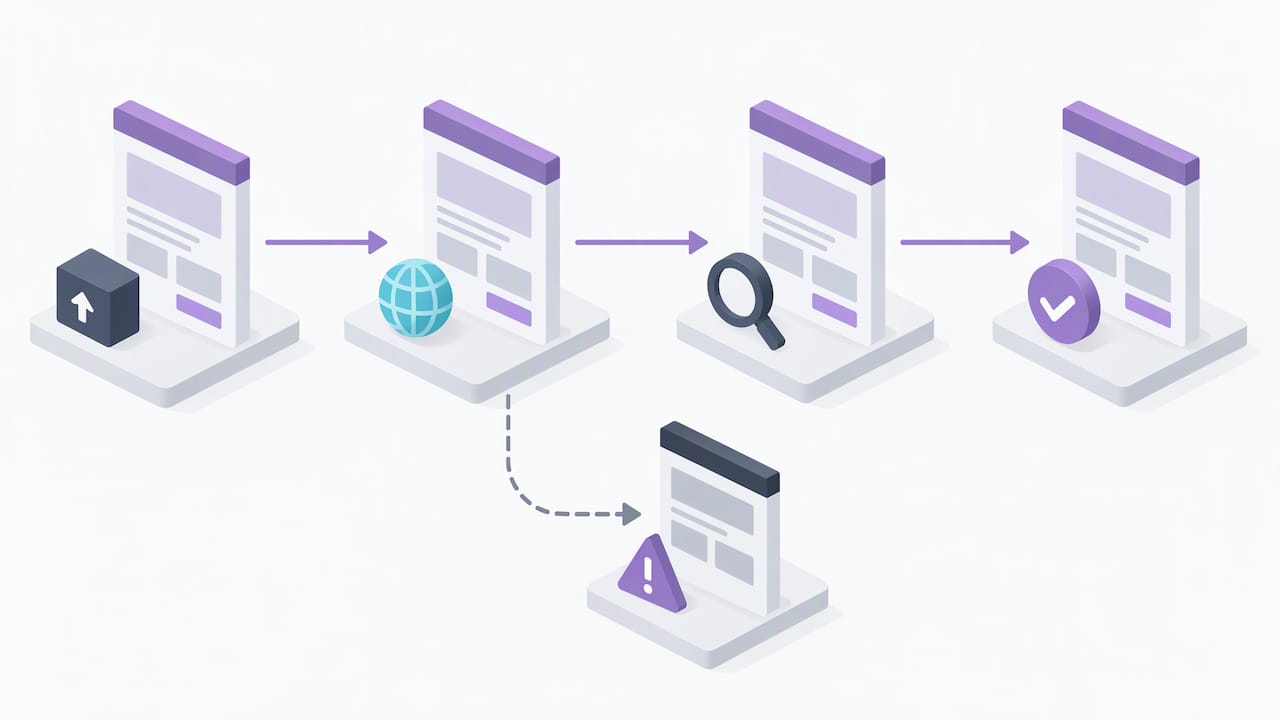
A safe page isn’t a standalone fix. It’s one layer in a workflow that separates what a reviewer sees from what a qualified end user sees, without ever deceiving the reviewer about the nature of the product.
- Build the reviewer-facing safe page first. Public navigation, neutral and substantiated content, visible pricing, and disclosures placed next to the claims they qualify.
- Verify crawler access and tracking setup. Confirm the page loads identically for automated review tools and real visitors, and use certified click trackers where the platform requires them.
- Layer the commercial funnel behind it. Gated or targeted pages for qualified end users sit downstream of the safe page, while the reviewer-facing layer stays benign and consistent with the audit checklist: disclosures visible, substantiation links present, messaging consistent across every touchpoint from ad to landing page to checkout.
Pro Tip: Run your own audit checklist before every submission: open the page in an incognito browser, check that disclosures are visible without scrolling past the first claim, and confirm the price and product match the ad exactly.
This is the point where most businesses in CBD, crypto, forex, or pharma verticals bring in setup support, since a misconfigured redirect or an inconsistent reviewer path can undo weeks of compliant copywriting in a single flagged submission.
A practitioner’s take on responsible safe-page use
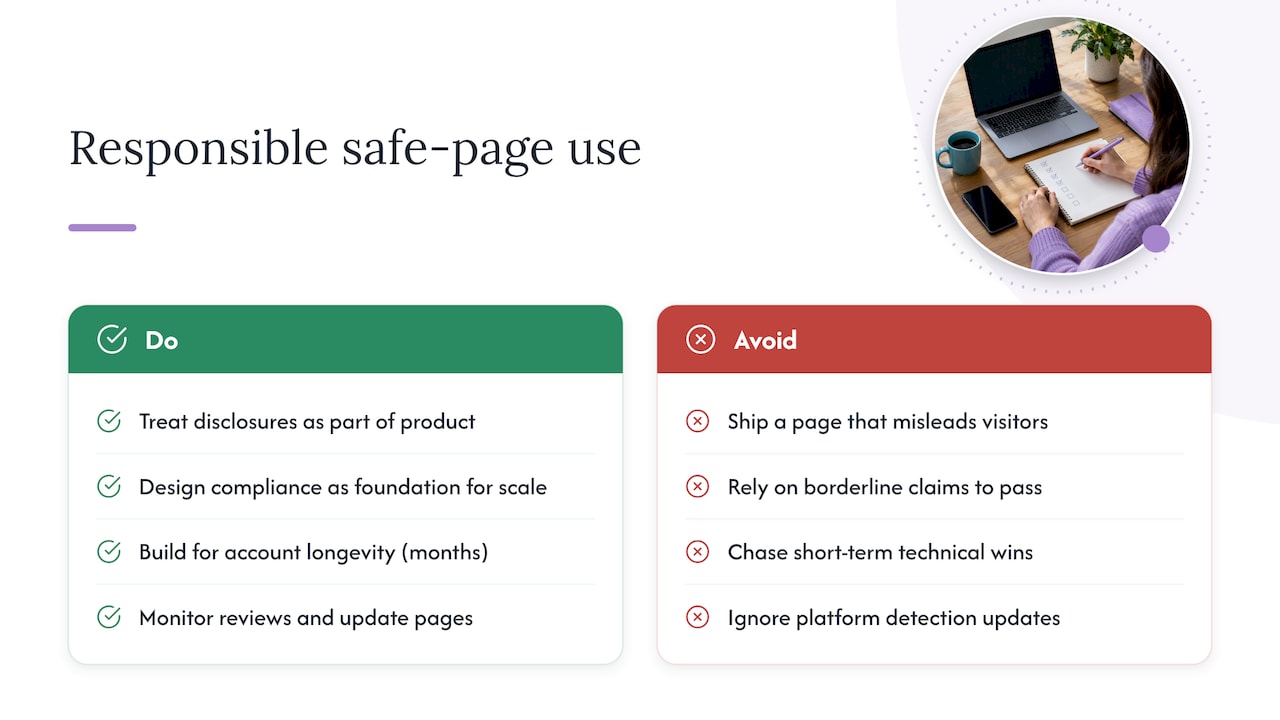
Working inside restricted verticals for ad approvals teaches a fast lesson: the businesses that last are the ones that treat disclosures as part of the product, not an obstacle to it. A safe page that technically passes review but still misleads a visitor is a short-term win and a long-term liability. Platforms update detection constantly, and an account built on borderline claims tends to collapse right when campaign spend is highest.
The better approach treats compliance as the foundation for scale, not a tax on it. An account that survives six months of review cycles generates more return than one that gets suspended after three good weeks. Account longevity is the actual ROI metric here, even though it rarely shows up in a dashboard.
— Umar
How we help you build and manage safe pages that hold up
We help businesses in CBD, crypto, forex, peptides, pharma, and other restricted categories by providing cloaking systems and compliant safe pages to support ad approval. A consultation call starts with an audit of your current landing pages, a review of which safe-page template fits your offer, and a technical checklist covering disclosures, substantiation links, and crawler access.
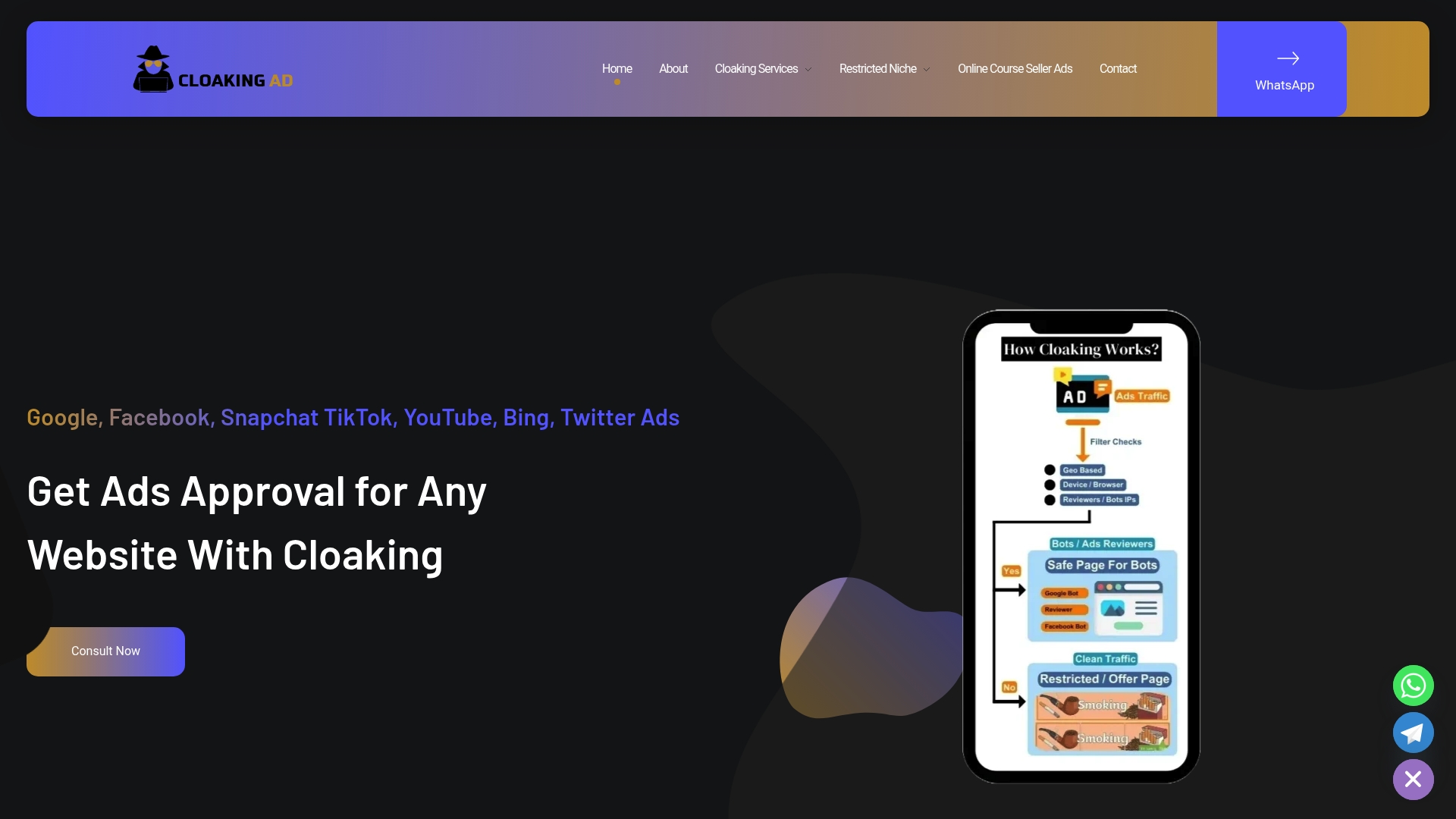
From there, you can choose a cloaking system setup if you want the technical infrastructure built for your team to run, or a fully managed engagement if you want ongoing account management alongside it. Either way, the goal stays the same: pages that satisfy reviewers honestly, so your account keeps running instead of getting flagged after one good week. Start with a consultation to see which setup fits your vertical.
FAQ
What makes a landing page “safe” for ad reviewers?
A safe page presents neutral, substantiated content with disclosures placed next to the claims they qualify, matching what the ad promised. Google’s destination requirements require functional navigation and original content that reflects the promoted product, which is the core standard reviewers apply.
Is a hyperlink disclosure enough to stay compliant?
Usually not. The FTC’s endorsement guides state that disclosures need to be clear and conspicuous, and a disclosure hidden behind a link is often treated as insufficient on its own.
What happens if my account gets flagged for cloaking?
Platforms treat circumventing-systems violations as serious, and Google’s own suspension guidance notes that reinstatement is uncommon even after an appeal. Prevention through compliant safe pages is far more reliable than trying to recover a suspended account.
Does CloakingAd build these safe pages for clients?
Yes, we build reviewer-facing safe pages and full cloaking setups as part of our cloaking system setup service, tailored to your specific vertical and platform. A consultation call is the starting point for most clients.
Do financial or crypto offers need different disclosures?
Yes, financial promotions carry their own prominence requirements for risk warnings beyond general advertising rules, as outlined in regulatory guidance like the FCA’s cryptoasset promotions review. Each jurisdiction’s financial regulator should be checked for category-specific rules before launch.
Sources
- Circumventing systems – Advertising Policies Help
- Health products compliance guidance
- FTC’s endorsement guides Q&A